Create it REAL’s Programmable Foam® in advanced head and neck support systems
A collaborative approach to innovation
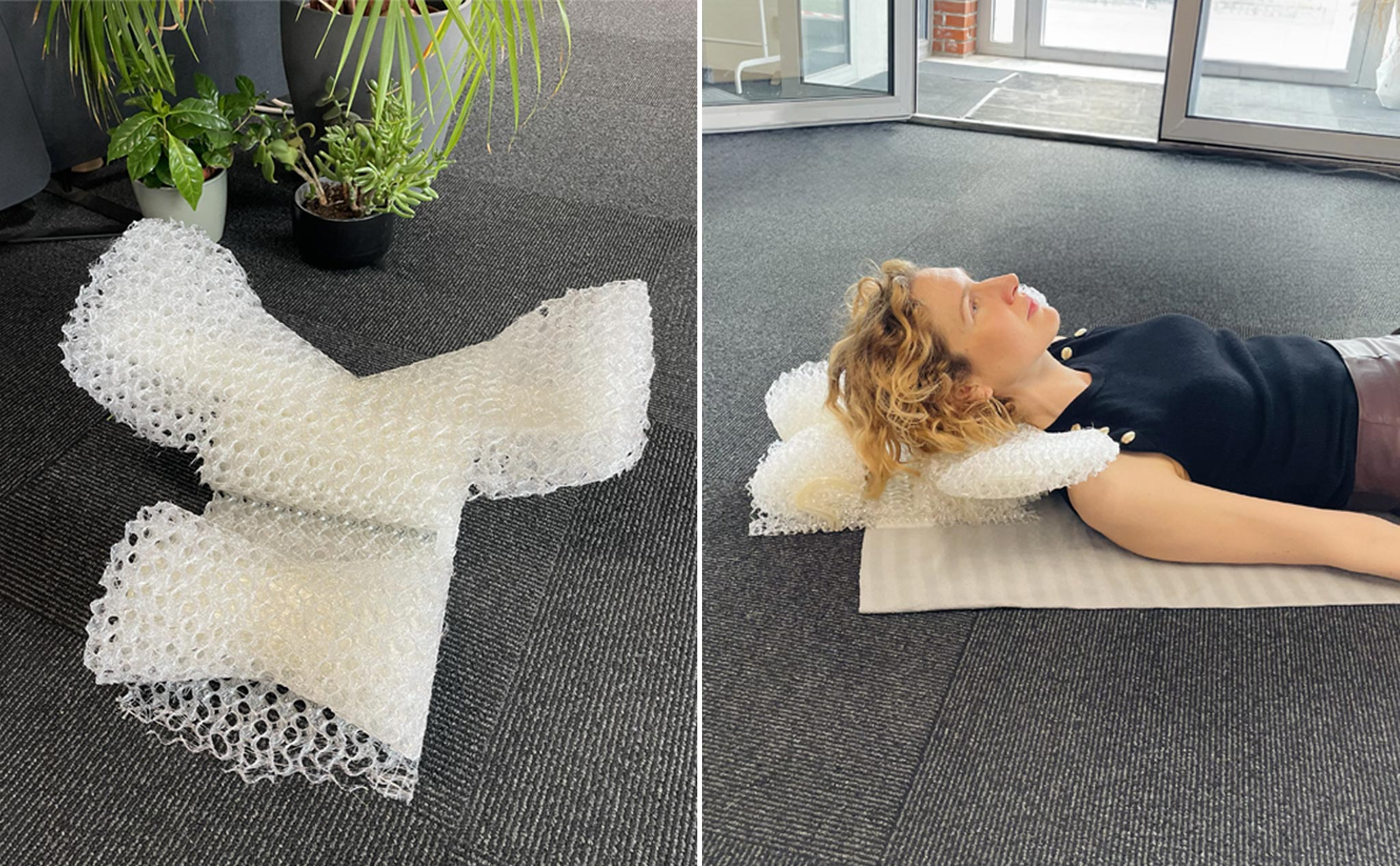
As part of our youth program, which fosters collaboration with student project groups, Create it REAL partnered with a multidisciplinary student team from Pittsburgh University that has a mission to develop a next-generation head and neck support system for bed-bound patients with disorders of consciousness. Our unique contribution: advanced Programmable Foam® technology, designed to deliver patient-specific support while meeting stringent clinical requirements.
The background for their project was the data that show that, falls lead to nearly half of all traumatic brain injury (TBI)-related hospitalizations, and severe cases can leave affected patients unconscious for extended periods. For the estimated 250,000 people in the US living in a minimally conscious state, traditional cervical collars often cause pressure ulcers, restrict tracheostomy access, and are difficult to clean. These challenges highlight the urgent need for a better solution.
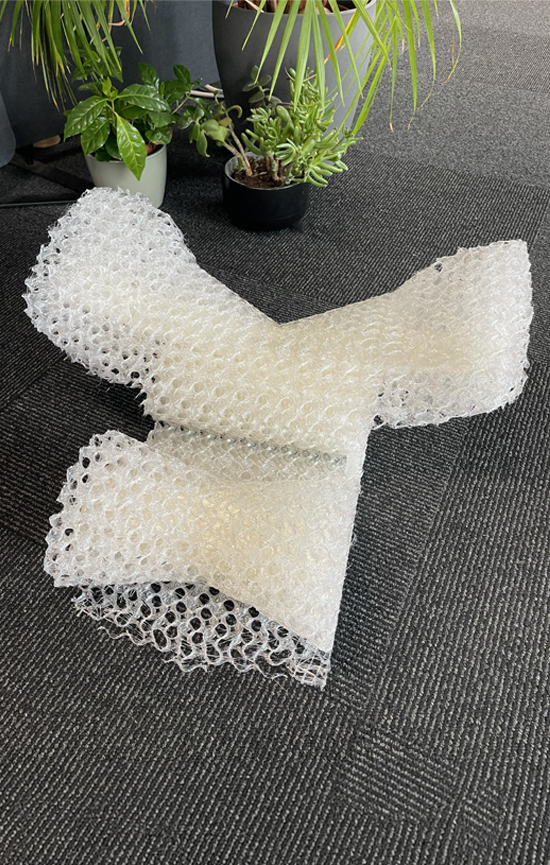
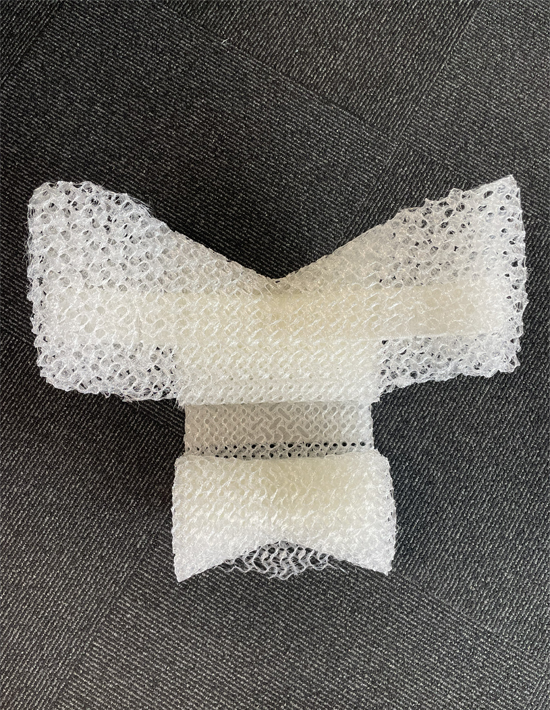
It is no secret that they ended up with a Programmable Foam® solution, so let’s look at the path to the final prototype.
The 9 key requirements for the head and neck support system
The project team established nine essential requirements to ensure the new head and neck support system would be safe, effective, and suitable for patients with disorders of consciousness. These requirements guided every design and material decision:
- Support the weight of the head
The device must reliably support a typical adult head weight (about 13 lbs) without excessive deflection or risk of failure. - Prevent pressure ulcers
The system must exert less than 9 kPa of pressure on the skin to minimize the risk of device-related pressure ulcers, a common complication with traditional collars. - Compatibility with most head shapes
The design must fit a wide range of head circumferences (20″–23″) to accommodate patient variability. - Lightweight construction
The total device weight must be under 4 lbs to ensure comfort and ease of handling.
- Antimicrobial materials
All patient-contacting surfaces must be made from materials that inhibit microbial growth to support infection control. - Cleanability
The device must be machine washable and withstand exposure to isopropyl alcohol for at least one minute to maintain high hygiene standards. - Breathability
Materials must allow air to pass through within three seconds to prevent heat and moisture buildup. - Manage spasticity
The system must be wearable for at least two hours and accommodate involuntary muscle contractions common in this patient group. - Avoid muscle atrophy
The design must allow repositioning in the three main patient positions, support movement, and reduce the risk of muscle atrophy.
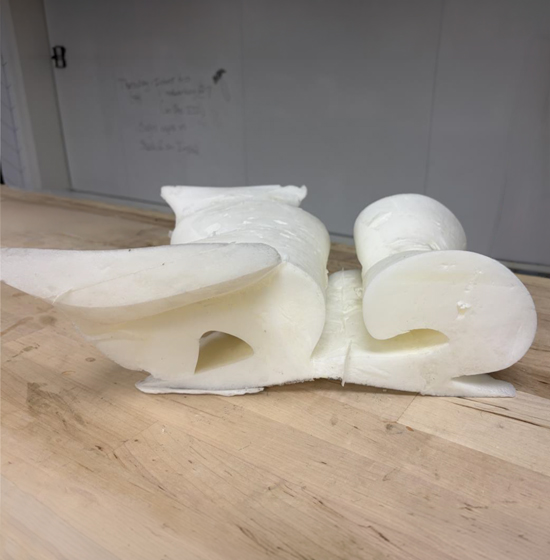
The first prototype was a 3D-printed structure with molded foam. Let’s have a look at why it wasn’t the best solution.
Empowering student innovators
Innovative students have long wanted to use our technology to solve hospital problems. We had the pleasure of working with Martim on his cervical collar project.
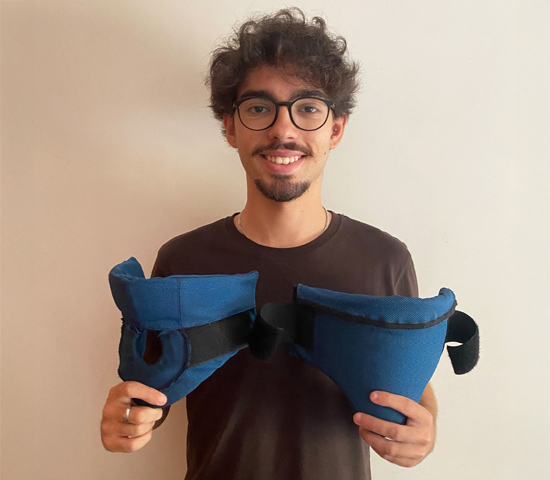
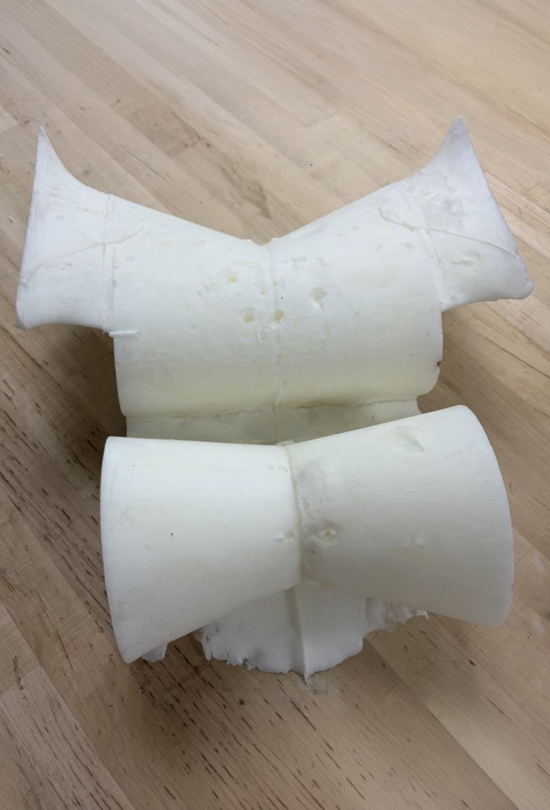
Why traditional foam failed
Traditional foam materials used in head and neck support systems presented several critical shortcomings that limited their effectiveness for patients with disorders of consciousness:
- Pressure ulcer risk
Traditional foams often exerted excessive localized pressure, contributing to pressure ulcer development. Hospital data show that up to 33% of pressure ulcers are device-related, and cervical collars (often made with standard foam) cause pressure ulcers in up to 78.4% of patients. - Lack of cleanability
Standard foams are difficult to clean and cannot be machine washed, leading to hygiene concerns in clinical settings. Their geometry and material properties make thorough disinfection challenging, increasing infection risk. - Limited customization
Traditional foams offer little to no ability to adjust rigidity or shape for individual patient needs. This lack of adaptability results in poor fit, discomfort, and inadequate support, especially for patients with varying head sizes or spasticity.
- Inadequate clinical compliance
Many traditional foams do not meet modern clinical requirements such as ISO 10993 compliance, antimicrobial properties, or moisture wicking. This further limits their suitability for long-term patient use. - Performance in testing
Pressure sensor data from the project showed that traditional foam prototypes produced neck pressures close to or above the 9 kPa safety threshold, while Programmable Foam® achieved significantly lower, safer pressure values (as low as 4.36–6.76 kPa).
By addressing these limitations, Create it REAL’s Programmable Foam® enabled the development of a safer, more hygienic support system better tailored to patient needs.
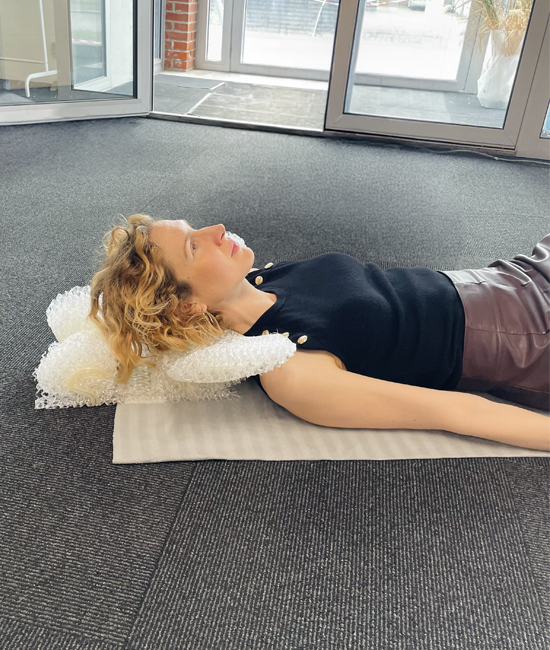
How Programmable Foam® made the difference
The students found these characteristics helped overcome the limitations of traditional PU foam:
- Customizable support: Programmable Foam® offers five distinct levels of rigidity, from extra soft to extra hard, allowing precise adaptation to each patient’s needs.
- Clinical compliance: Programmable Foam® is ISO 10993 compliant, antimicrobial, machine washable, and moisture-wicking, ensuring hygiene and safety in demanding hospital environments.
- Pressure ulcer prevention: Testing showed their Programmable Foam® based prototype reduced neck pressure to as low as 4.36–6.76 kPa, outperforming traditional braces and minimizing the risk of device-related pressure ulcers.
From concept to prototype
The student team, supported by Create it REAL’s technical experts, followed a rigorous design and validation process:
- Needs assessment:
Site visits to leading medical centers informed the design constraints, tracheostomy access, CPR compatibility, and support for multiple patient positions. - Iterative prototyping:
CAD modeling, 3D printing, and foam molding cycles led to a modular, lightweight device tailored for comfort and safety. - Material selection:
They chose Programmable Foam® for its unique ability to combine comfort, support, and hygiene. They selected aluminum and nylon for the frame and straps, balancing strength and breathability. - Validation:
Pressure sensor testing at WISER confirmed the prototype’s effectiveness in reducing harmful pressure points.
Meeting the requirements
By integrating Create it REAL’s Programmable Foam®, the final device meets all nine clinical requirements, including support for head weight, pressure ulcer prevention, and compatibility with various head shapes. Its modularity and cleanability set a new standard for patient care devices.
| Requirements | Constraints | ||
|---|---|---|---|
| Support weight of head | Antimicrobial | ||
| Prevent pressure ulcers | Cleanable | ||
| Compatible with most head shapes | Breathable | ||
| Lightweight | Manage spasticity | ||
| Avoid muscle atrophy |
Looking ahead
This collaboration demonstrates how technology providers and student innovators can accelerate medical device development. The next steps include further clinical testing, regulatory approval, and scaling production to bring this life-improving solution to more patients.