Hidden complexity comes for free
- Gradient transition and the hidden springs
In the Embrace solution suite, all complexity is hidden. You do not need to know anything about 3D printers in advance; we will teach you everything during onboarding sessions.
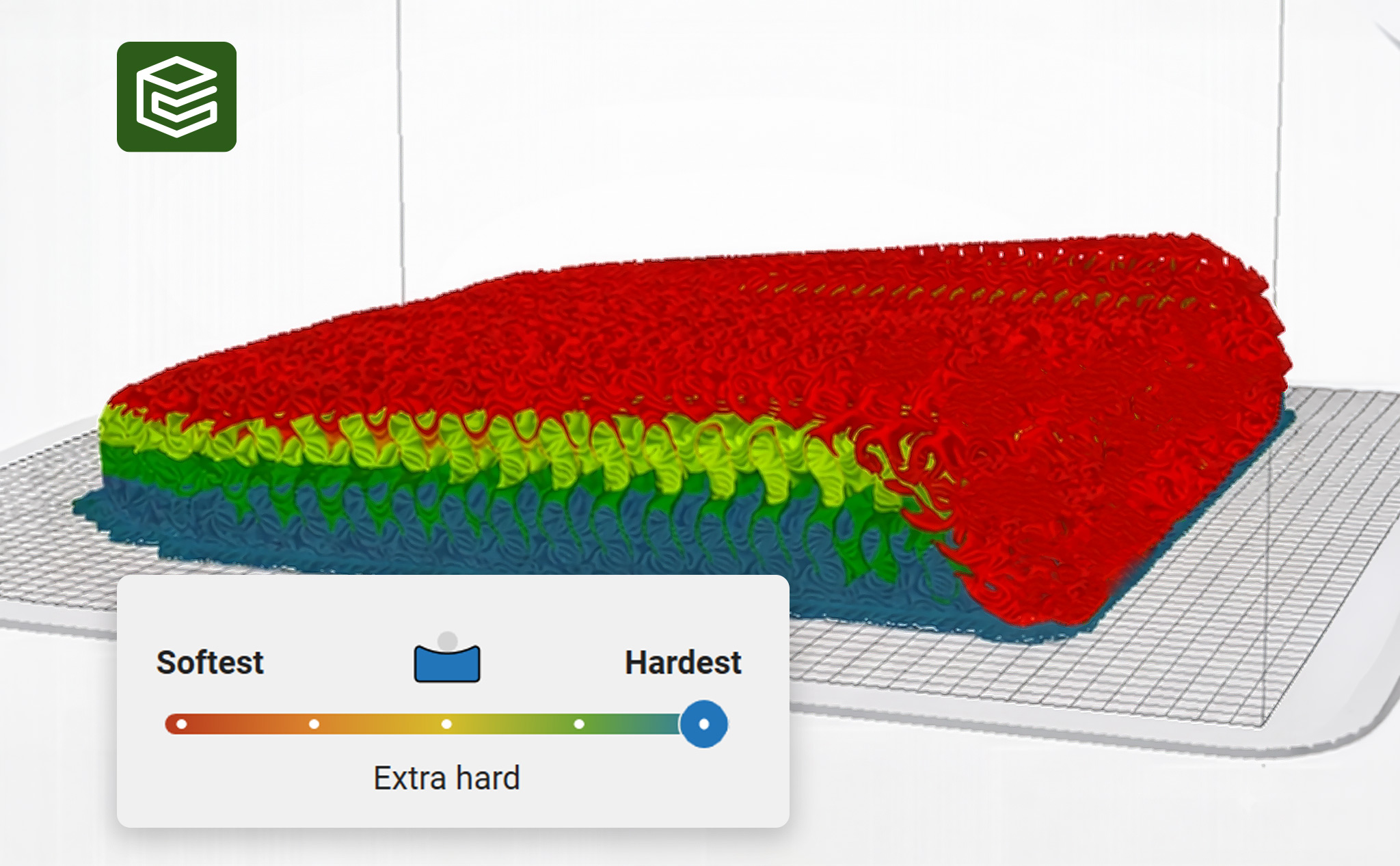
Does this mean the technology is simple and that anyone can copy it? No, not at all. The complexity is hidden, and the production solution is highly stable, allowing you to focus on what you do best: caring for your patients’ needs. One of the unique, patented features that comes fully integrated is the gradient transition between zones of different hardness or stiffness in three dimensions. Let’s take a look at how it works.
Prepare the 3D print
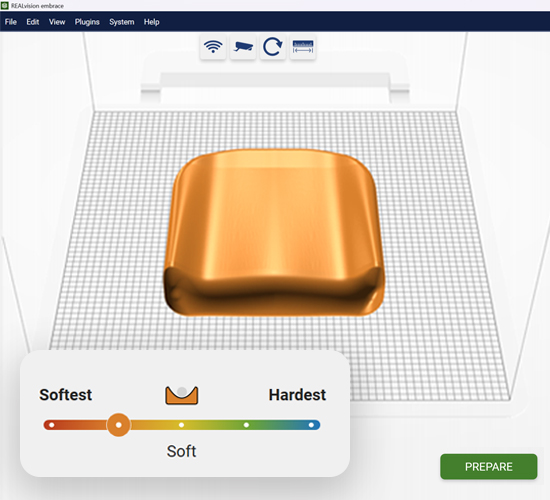
The magic happens inside REALvision Embrace, the only slicer featuring Programmable Foam® technology. Simply import your seat 3D model into REALvision Embrace to get started.
For Programmable Foam® technology, we have defined five distinct hardness levels: Extra soft, soft, medium, hard, and extra hard. These can be applied strategically throughout the design. The first step is choosing a standard hardness for the device, which serves as the fallback baseline when no other zones are defined.
Zones for relief, support, or comfort
Now you are ready to add special features to your seating aid by defining modifiers. Modifiers are zones with varying hardness levels, where you can bring your clinical vision to life. All you need to consider is whether the patient needs relief, support, or comfort, and whether any specific areas require special attention.
You do not have to consider the transition between zones. The transitions are neither hard, rough, nor weak, but are fully seamless thanks to our patented slicing technology. This completely eliminates the hardness spikes typically caused by glue, unwanted hardness variations from surrounding contours, or sudden hardness drops from non-continuous infill lines.
We will dig a little deeper into the technical mechanics later, but let’s first look at how different modifiers apply to real-world scenarios.
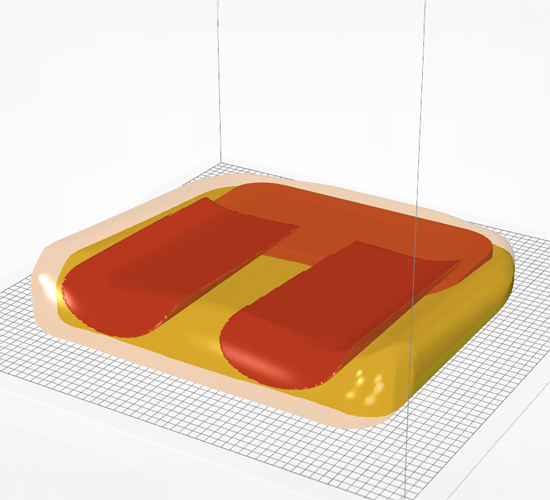
Standard parametric with medium softness and soft zones
Who does it fit: This configuration is ideal for users with standard symmetry who require reliable everyday comfort combined with targeted pressure relief under the ischial tuberosities.
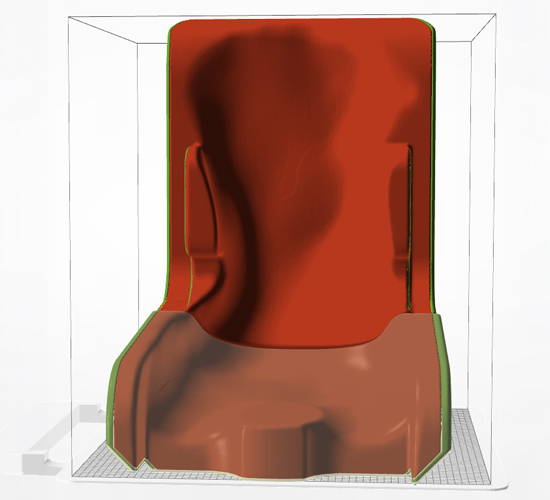
Complex seating orthosis with built-in postural support
Who does it fit: Custom design for patients with complex postural needs, such as severe scoliosis or pelvic asymmetry. The software allows you to blend firm, supportive contours directly into extra-soft pressure-relief zones without creating harsh edge thresholds.
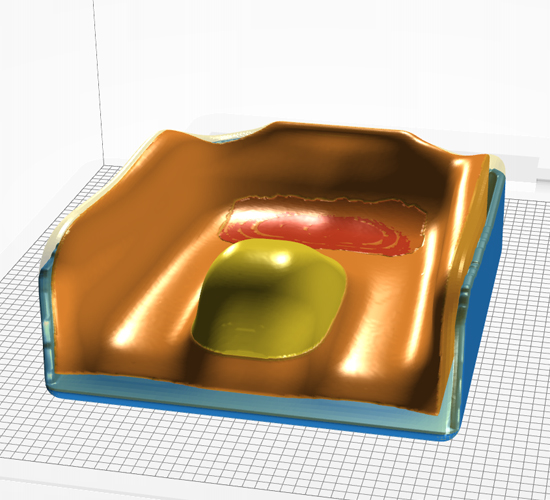
Custom parametric design for active users
Who does it fit: Perfect for high-mobility users who require a lightweight, durable cushion that offers high stability for frequent transfers while maintaining excellent vibration damping during daily activities.
Precision, comfort, speed, and durability
Comfort
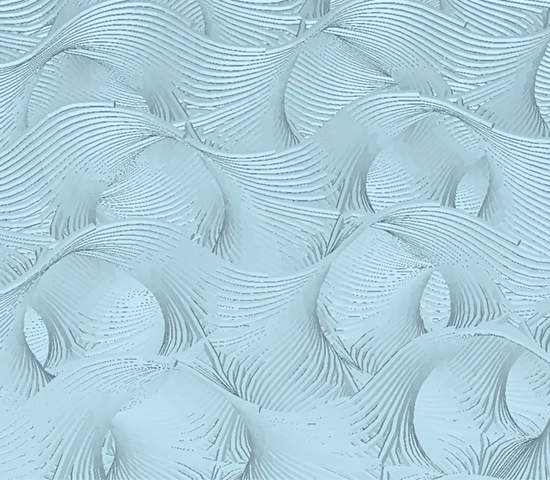
We developed our own specialized gyroid structure directly into a custom slicer for our Programmable Foam® technology, because not all gyroid structures are the same. The pressure distribution characteristics of the Programmable Foam® are exceptional. The structure itself features a built-in spring effect and was specifically engineered to achieve perfect isotropic behavior. We precisely engineer this using a carefully verified set of slicing properties to obtain the exact hardness or stiffness you request. On top of this, we optimize Programmable Foam® to achieve a well-documented, certified technology that is gaining popularity worldwide.
Precision
Precision may be one of the most vital features. Even though TPU material is notoriously difficult to control, we achieve precision sufficient for millimeter-accurate devices. This precision ensures your special zones are positioned exactly where you intend. If you add scoliosis support, you can expect total accuracy to provide maximum stabilization for the patient. Thanks to the gradient transition, this support blends in beautifully, with no hard layers or rough boundaries.
Durability
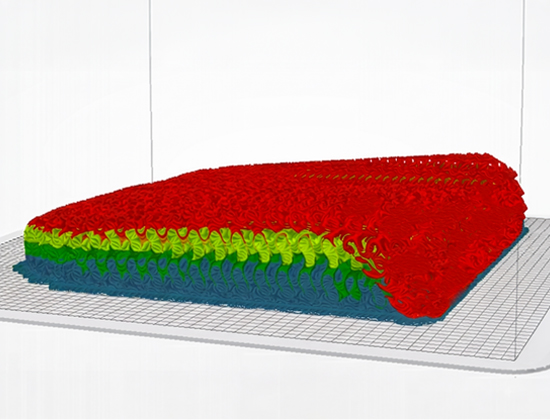
The gradient ensures a smooth device with controlled transitions between hardness zones, eliminating mechanical weak spots and ensuring long-term durability. This durability comes from extensive field use, rigorous testing, and the optimization of our printing principles. The source of this outstanding durability lies in advanced software adjustments that optimize layer heights and maintain an unbroken gradient transition as softness and hardness shift. Of course, when combined with the right TPU material, it becomes a success story in its own right.

Speed
One engineering principle stands above all others: always prioritize maximum performance. This specialized software feature ensures that line thickness is never compromised and that the print head always runs at maximum extrusion, allowing the 3D printer to operate at its absolute performance limit. We know that for a commercial production system, speed and time are critical. We are constantly looking for opportunities to optimize, but never at the cost of end-product quality.
Complexity comes for free
Luckily, you do not need to worry about any of these mechanics when using Programmable Foam® technology. The complexity comes fully integrated into the production system. When you add softer or harder zones, the software automatically calculates and applies the gradient transitions. This allows you to lean back and focus entirely on your patients’ need for relief, comfort, or support, using your clinical skill set to create the ideal seating aid.
If you are unsure about when to deploy the different hardness levels or how this workflow compares to your current methods, we are here to help. We know that Programmable Foam® technology represents the best path forward for seating design, but we also understand the importance of a gentle introduction. We handle the technology onboarding, while you bring the essential clinical knowledge. When your patients depend on wheelchair seating, only the best will do. Ultimately, it is this patented gradient transition that allows Programmable Foam® to mechanically perform better than traditional foam, seamlessly adapting where the body needs support most.