Prosthetic socket strength is redefined by Programmable Plast™ technology
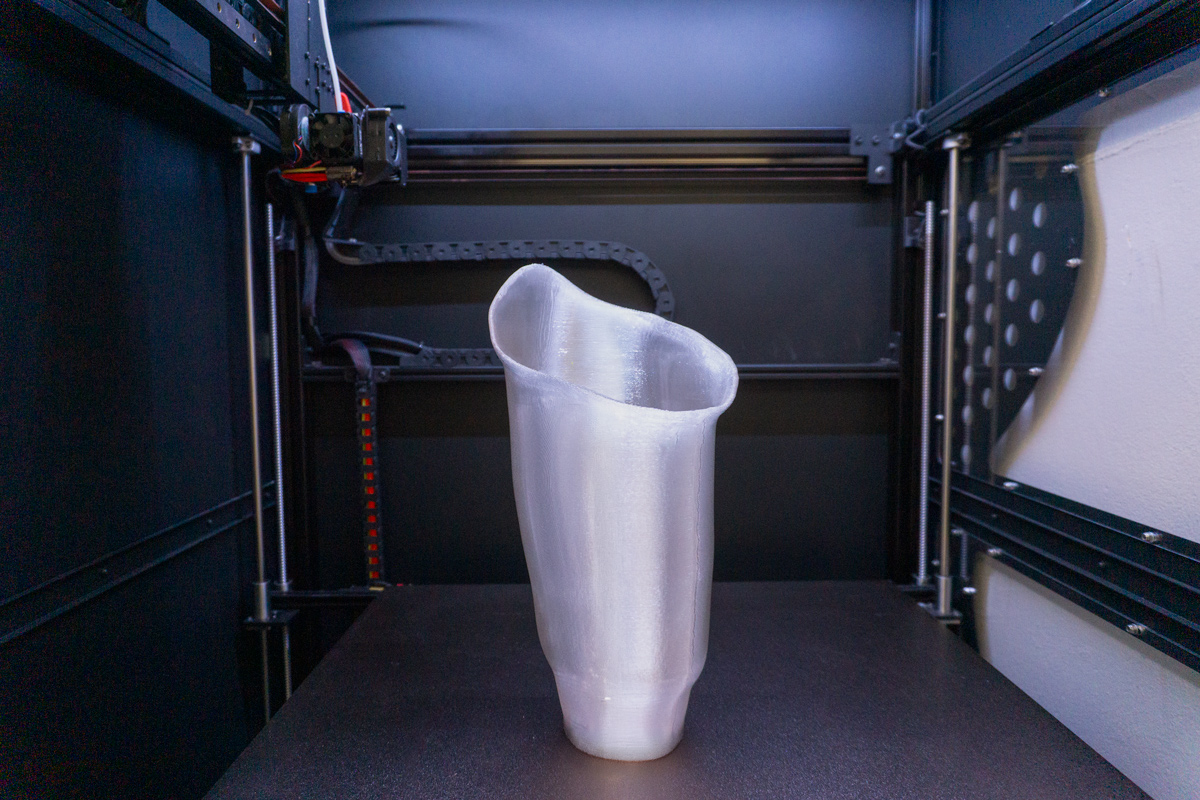
Standard FDM 3D printing has historically faced limitations in weight-bearing medical devices. However, the introduction of Programmable Plast™ technology is changing the landscape. By focusing on smart slicing and strong print strategies, structural integrity is maximized, enabling a focus on quality and strength in the FDM workflow for prosthetic sockets. This is good news for workers’ safety, sustainability, accessibility, and the economy.
Additive manufacturing is overtaking traditional crafting in the prosthetic industry. The new generation of industry professionals is much more digital, so what was a hurdle to overcome before becomes the natural starting point. The advantages do not stop with the ability to attract a younger workforce. Sustainability and the responsible use of resources are issues that citizens around the world need to consider for generations to come.
In a digital workflow, there is no plaster process, and the 3D printing process does not involve any waste. When the socket is worn out, the material can be reused or recycled into new filament.
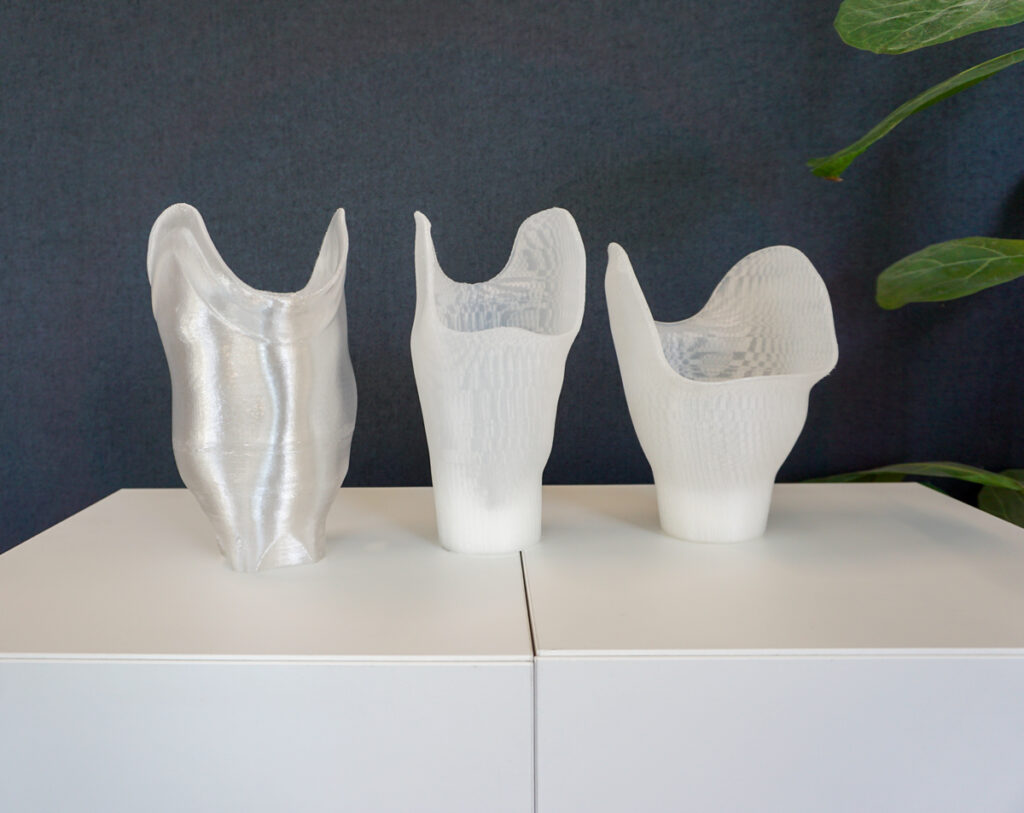
Expanding the device catalog digitally
With the new addition to the Embrace Corset solution, the product range can be expanded to include prosthetic sockets. This digital shift means the plaster days are finally over, forever changing the manufacturing workflow.
However, we need to ensure quality, so every material undergoes testing and certification. We believe the technology will soon be ready for permanent sockets as well. For now, we are releasing one material at a time to ensure production flow and quality.
The transition to a digital workflow delivers significant advantages for professionals and patients:
- Clinical outcomes are improved through precise anatomical fit, smooth internal surfaces, and optimal volume conservation for all-day patient wearability.
- Operational costs are minimized through a scalable system that reduces manual labor and eliminates the need for physical plaster molds.
- Application versatility is achieved by using a specialized strength-printing strategy suitable for both above-knee and below-knee applications.
Validated material performance for PP and PETG
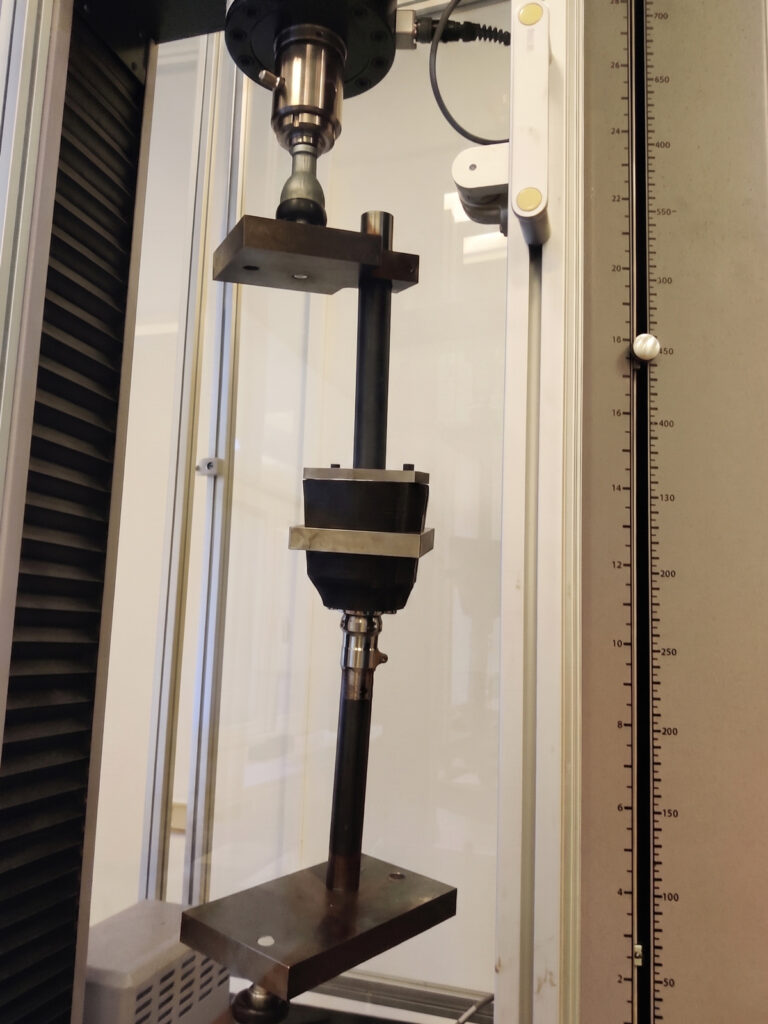
Every print strategy is thoroughly tested to challenge the boundaries of FDM 3D printing, ensuring all sockets are printed in accordance with ISO 10328 standards. Orthopedic professionals can choose between two optimized materials based on patient needs.
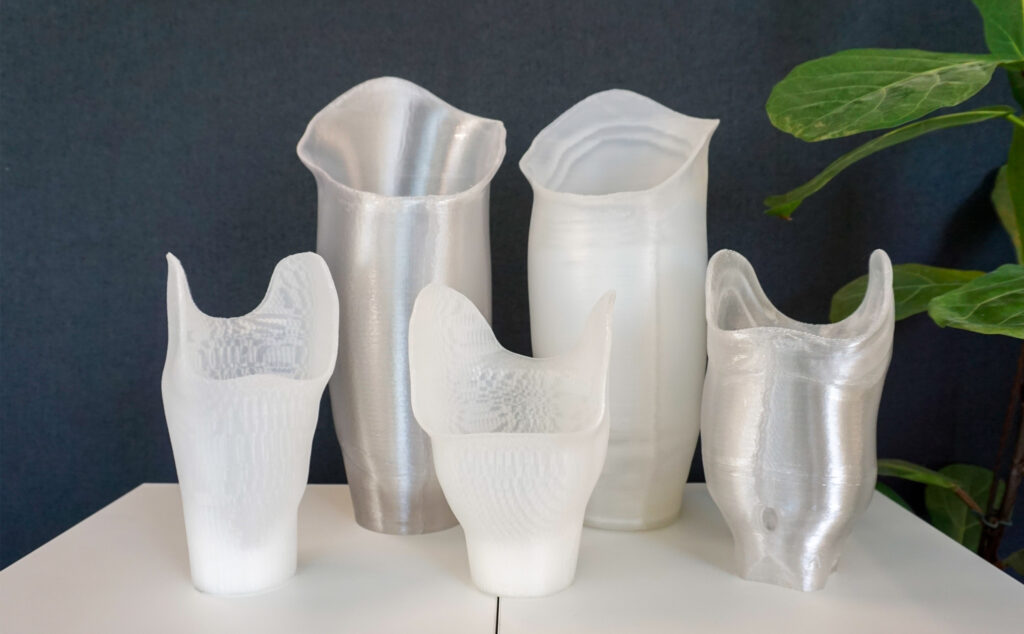
- The first option is Polypropylene (PP), chosen for its balance of flexibility and strength. It results in a very smooth surface, is 30% lighter than a traditional socket, and is fully approved by patients.
- The second option is PETG, selected for characteristics that are even closer to a permanent socket due to its increased rigidity. By implementing patented strong-print strategies, a 60% increase in strength is achieved, ensuring durability during daily use.
Production system with humans in focus
A production system that allows you to optimize the time spent with patients, and at the same time is clean and simple to operate. We all know that future generations need us to focus more on optimizing the use and reuse of resources.
The Embrace Corset solution features a Programmable Plast™ production technology with a range of available devices. In addition to the newly released sockets, it is also suited for rigid spinal braces and soft body jackets.