From angular blocks to organic architecture
Rethinking medial thigh/knee supports with Programmable Foam®
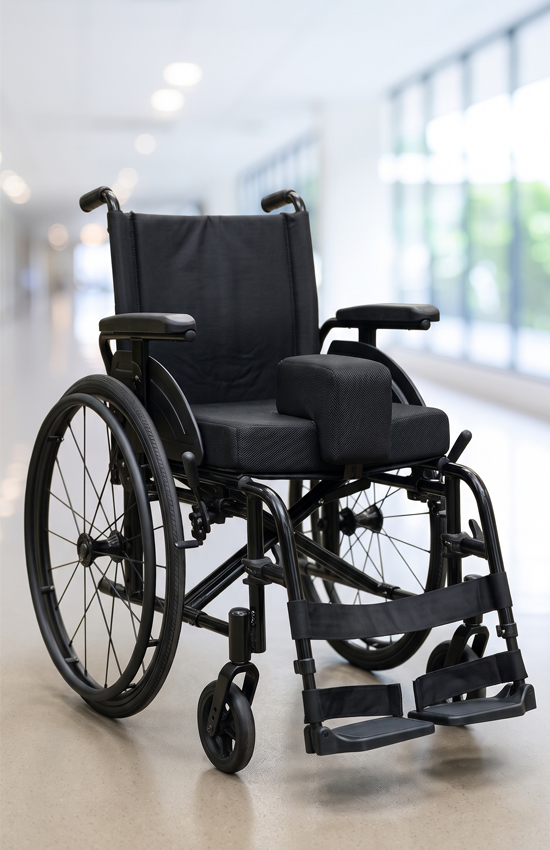
In complex postural seating, the medial knee support, commonly called a pommel or abductor block in commercial and clinical practice, serves a critical clinical function. Its main purpose is to keep the hip joint properly aligned, preventing the legs from crossing, turning inward, or developing long-term deformities.
However, seating specialists often face a paradox. While the clinical intent is structural alignment, the user’s physical reality is continuous skin contact. A successful medial thigh support must deliver high-level medical positioning and soft, skin-protective comfort at the same time.
The legacy of angular compromises
- High shear and impact hazards: Sharp 90-degree edges concentrate lateral pressure on delicate inner thigh tissue during spastic episodes or transfers.
- Underlying mechanical hardware: Traditional pommels rely on drop-in metal stems, hinges, and bracket tracks hidden beneath thin padding. High muscle tone often drives the user’s anatomy directly into these hard internal structures, leading to deep tissue trauma.
- Microclimate breakdown: Solid polyurethane foam traps body heat and sweat against the skin, causing thermal buildup and maceration that drastically increases pressure ulcer risks.
- Hygiene and delamination: Glued multi-foam layers degrade under urine and fluid exposure, creating unsterilizable bacterial reservoirs deep within the cushion.
Because of these drawbacks, clinicians frequently face a lose-lose trade-off: prescribe a clunky, angular pommel that maintains leg alignment at the expense of skin integrity, or omit the support entirely, leaving pelvic stability compromised.
The paradigm shift of 3D-printed monomaterial integration
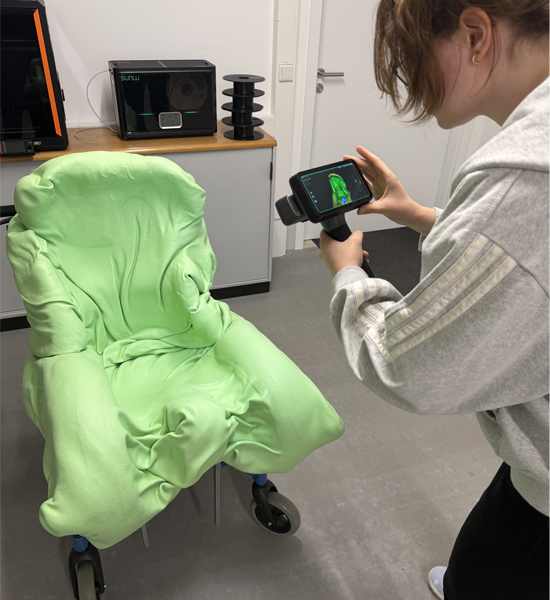
Additive manufacturing with Programmable Foam® eliminates the box entirely, replacing subtractive foam blocks with organically sculpted, 3D-printed TPU lattice structures integrated directly into the seat cushion.
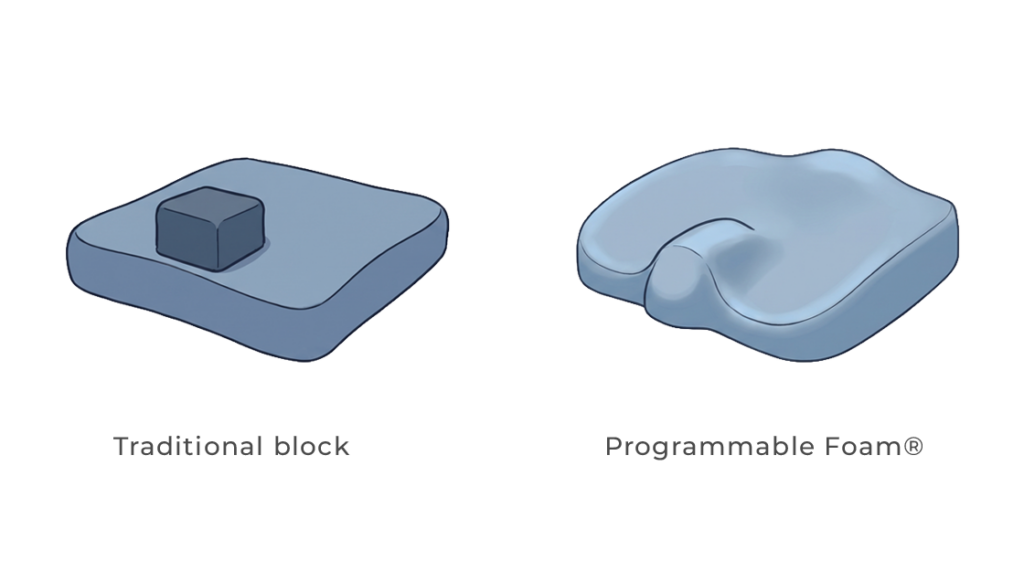
| Traditional block or fabric pommels | Clinical and technical vector | Integrated Programmable Foam® pommel |
|---|---|---|
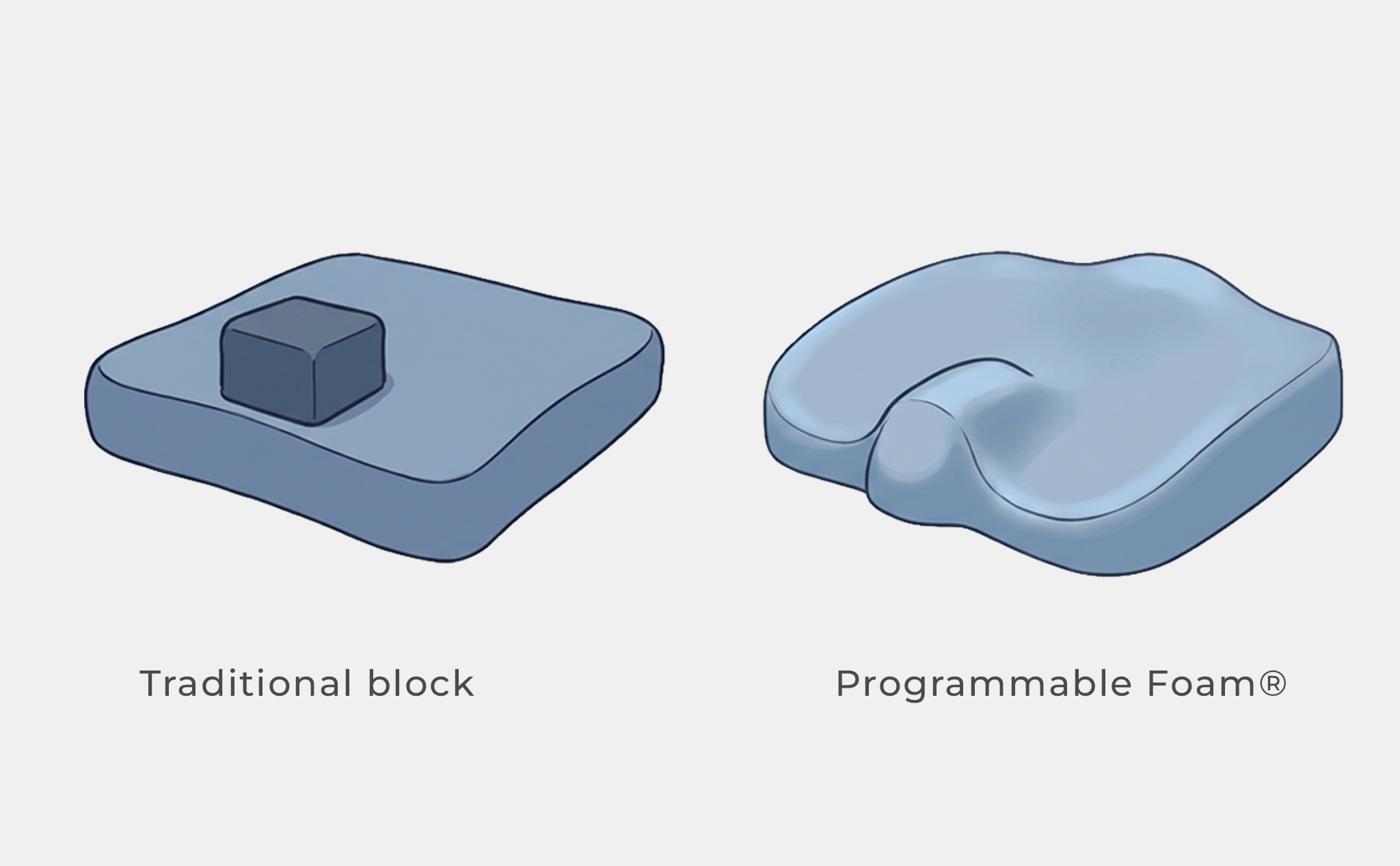
| Angular, boxy: high risk of skin shear | Geometry and edges | Anatomically contoured: smooth, organic transitions |
| Uniform hard density or rigid core | Mechanical performance | Variable density (firm structural core, ultra-soft outer skin) |
| Static: transfers vibration to user | Active shock absorption | Progressive lattice damping: absorbs dynamic road impact |
| Traps heat and perspiration | Microclimate control | Open-cell breathability: active passive airflow |
| Absorbs fluids: prone to degradation | Hygiene and maintenance | 100 percent non-absorbent: fully washable and disinfectable |
| Up to 50 percent carving waste: mixed glues | Sustainability | Monomaterial TPU: zero waste additive printing |
Severe postural needs and asymmetrical accommodation
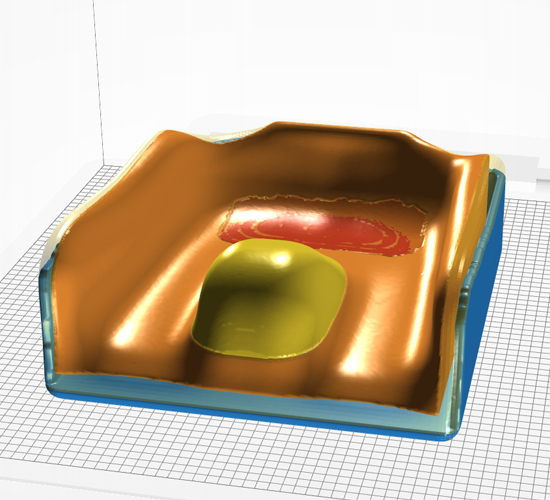
- Variable lattice density: A dense inner lattice provides the structural resistance needed to prevent leg scissoring, while a soft outer lattice feathers out to cushion spastic spasms without tissue breakdown.
- Integrated stability: Being printed directly as part of the monolithic seat base ensures the support cannot loosen, rotate, or migrate out of position over time.
- Removable: When you need a removable abductor block for better seating access, solid infill lets you screw metal parts directly into the pommel and easily connect to the seating aid.
Active wheelchair users and dynamic dampening
- Organic shock absorption: The 3D lattice acts as a progressive spring. It dampens ambient vibrations and sudden lateral bumps during active mobility, protecting the medial condyles.
- Sleek aesthetic and smooth transitions: Eliminating bulky hardware brackets and boxy profiles gives active users a streamlined, high-performance aesthetic that looks like integrated automotive engineering rather than an unsightly medical attachment.
Tailored engineering and organic design freedom
While standard monolithic integration covers most clinical needs, specialized features such as quick-release hardware or custom removable options can be engineered upon request through our dedicated design service.
Beyond hardware options, Programmable Foam’s fundamental clinical advantage is complete geometric freedom. Traditional air-filled cushions and standard foam systems are inherently constrained by their manufacturing methods:
- The limitation of air cell seating: Systems relying on air-filled bladders or individual air pockets must maintain symmetrical, cell-based grids to contain air pressure. While effective for static immersion, they cannot produce smooth, continuous anatomical contours. The leg is forced to rest on a series of rounded bubbles or fabric seams rather than a continuous support surface.
- The limitation of carved foam seating: Traditional contoured foam cushions rely on multi-axis CNC carving, which is limited by tool angles. Carving produces rigid steps, flat bevels, and boxy edges that fail to match the natural, flowing contours of human anatomy.
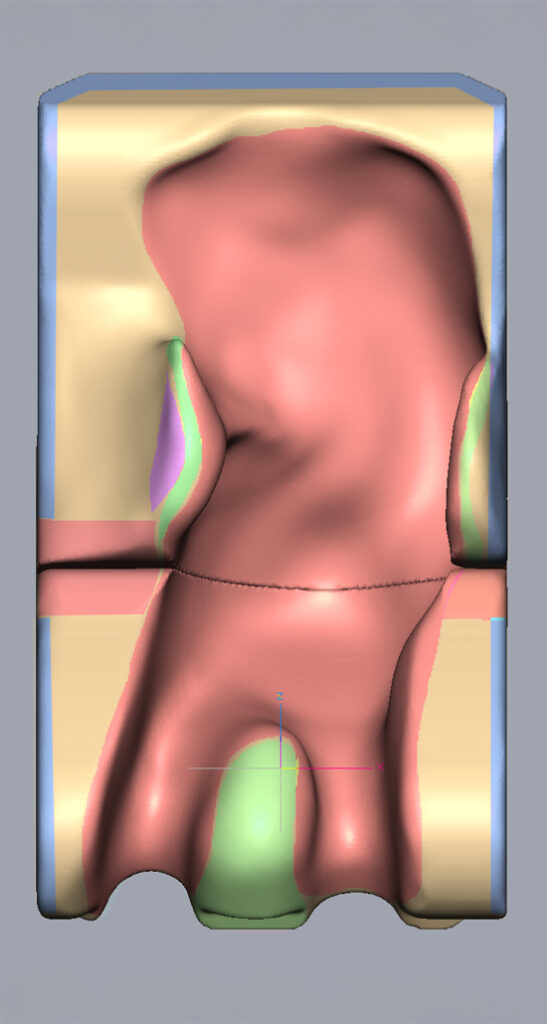
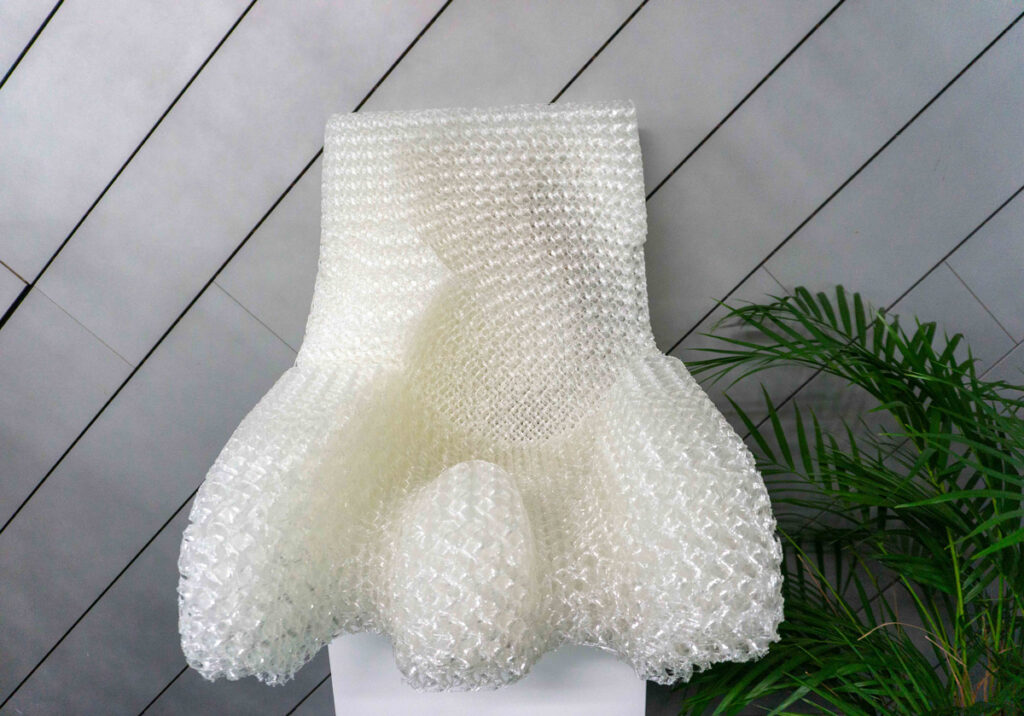
Programmable Foam® breaks through these geometric constraints by enabling true organic sculpting. Because the 3D lattice is built layer by layer from digital scan data, designers can program fluid curves, sweeping leg channels, and variable wall angles.
Advantages across cushion platforms
Fully molded custom seats
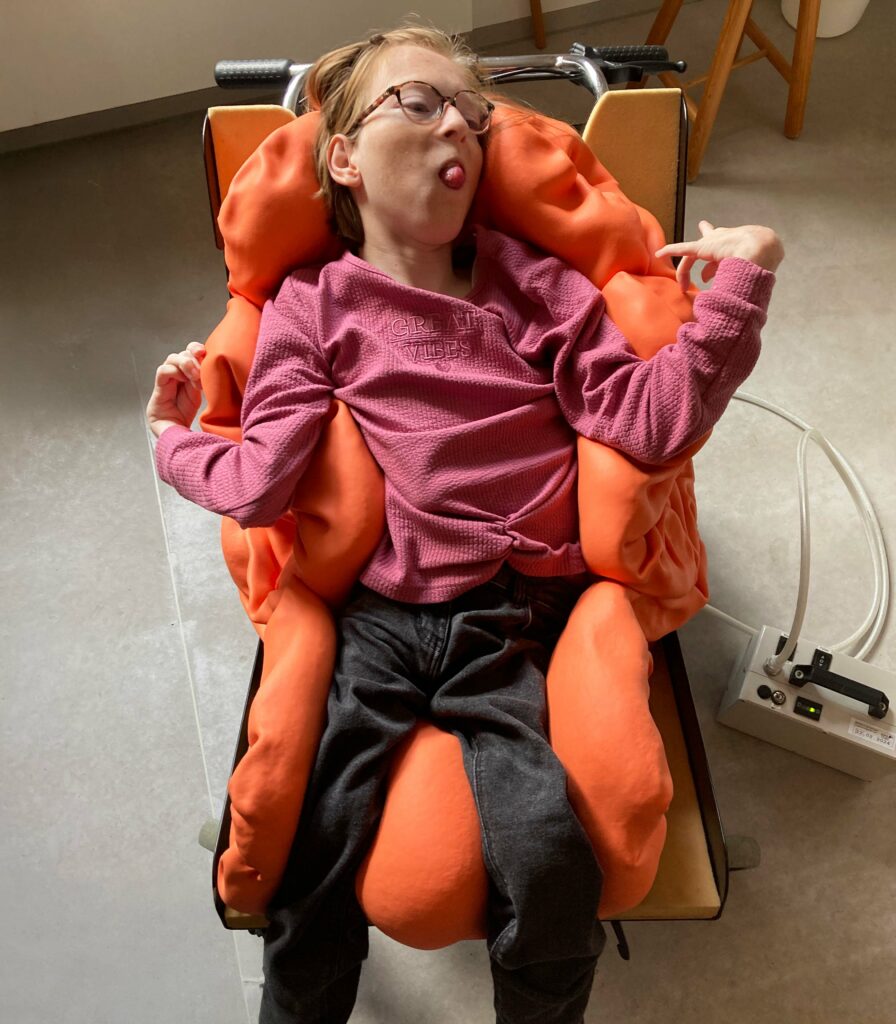
For complex, full-body postural support, organic shaping allows the seat and medial support to form a single continuous surface. The transition from the seat pan up into the medial thigh guide flares outward in a smooth, fluid wave. This eliminates the sharp junctions where pressure hotspots and skin shear typically occur in custom molded seating.
Standard seating and custom modified cushions
In standard cushion shapes, incorporating organic leg troughs and contoured pommel transitions provides immediate positioning guidance without the intrusive bulk of a traditional add-on block. Clinicians can offer end users an anatomically shaped support surface that feels natural, reduces peak pressure along the inner thighs, and maintains a sleek profile.
By translating 3D scan data into smooth anatomical architecture, our design service ensures that positioning support follows the true geometry of the user’s body rather than forcing the body to conform to rigid manufacturing shapes.
Traditional block or fabric pommels vs.
Integrated Programmable Foam® pommel
Hygiene, microclimate, and sustainable manufacturing
Microclimate management
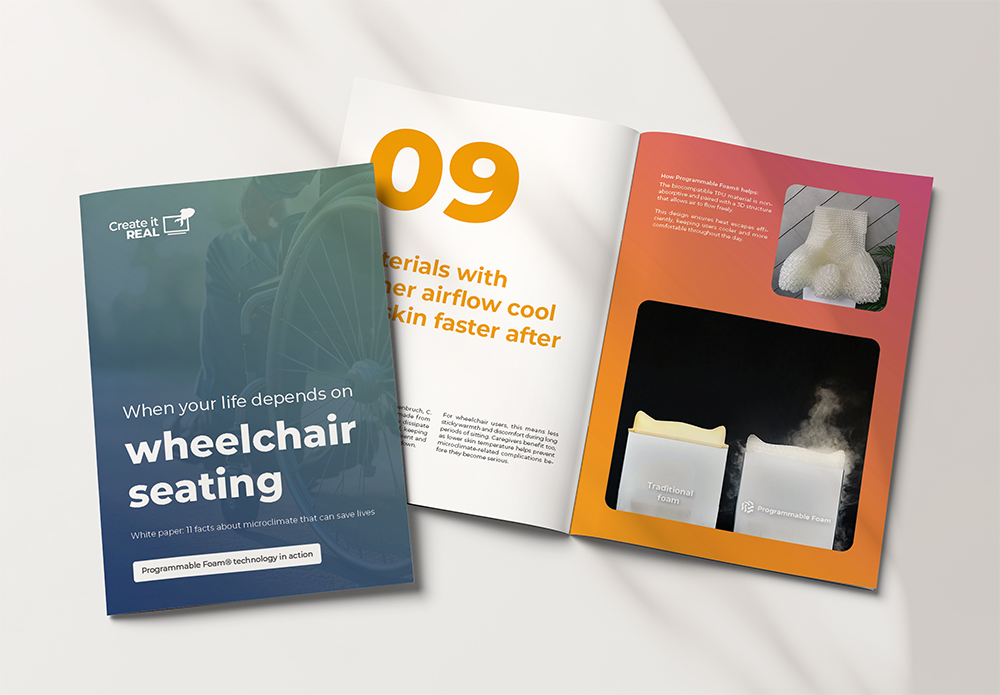
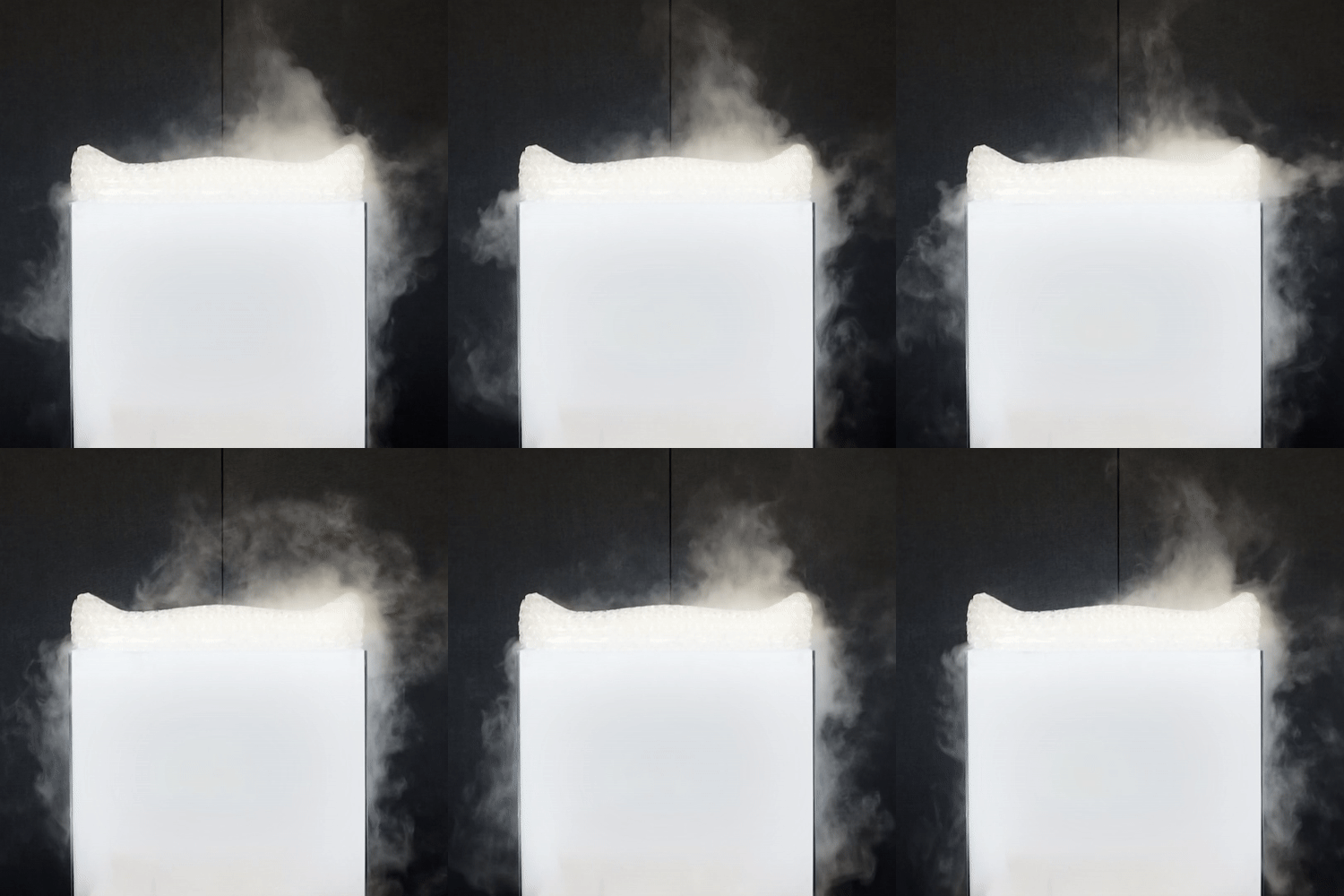
The open TPU lattice allows continuous passive airflow, reducing skin surface humidity and lowering ambient temperature to protect skin integrity. Independent microclimate testing, conducted following the University of Pittsburgh wheelchair cushion test protocols, confirms significant reductions in heat retention and moisture accumulation compared to traditional solid foam. You can download our full microclimate white paper for detailed test data.
Clinical hygiene
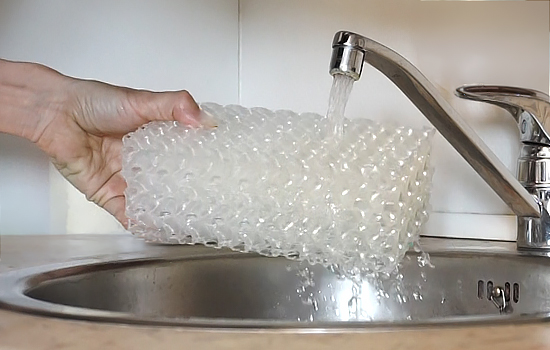
Programmable Foam® does not absorb moisture, sweat, or urine. You can sanitize the component directly with hospital-grade disinfectants or wash it with water without structural degradation.
Zero-waste sustainability
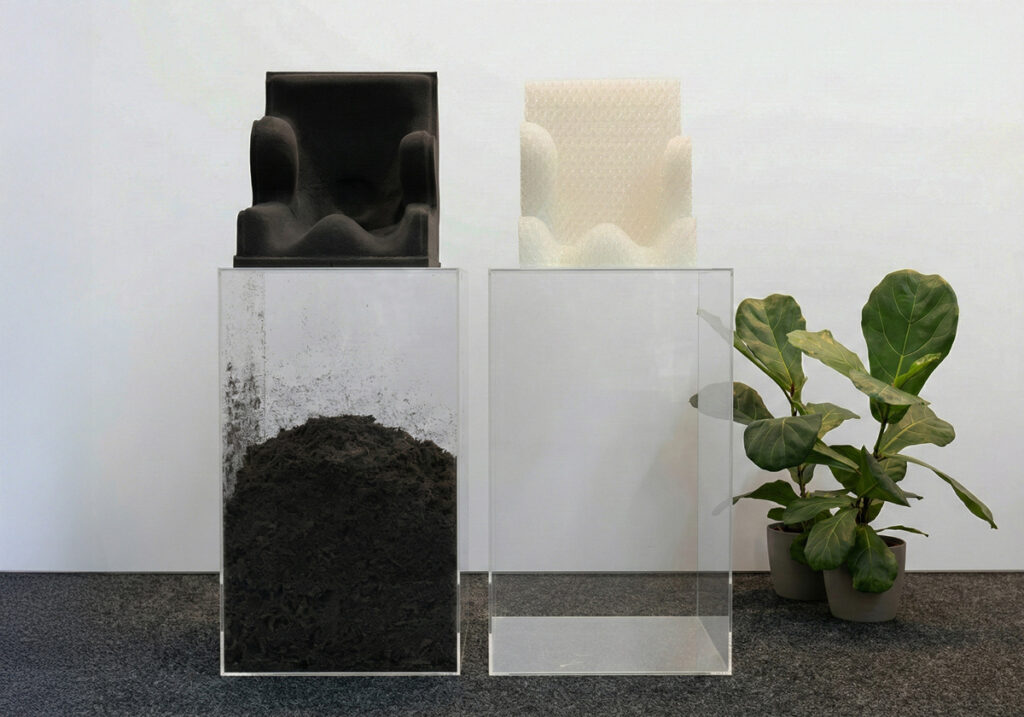
Unlike traditional foam carving, which generates up to 50 percent waste scrap, 3D printing places material only where needed. As a 100 percent single-material TPU component free of adhesives or metal inserts, it is fully recyclable at end of life.
Clinical justification for OTs and ATPs
When documenting medical necessity for a custom 3D-printed Programmable Foam® medial knee support, seating specialists can reference the following clinical justification template:
Patient presentation: Client presents with severe extensor tone, severe hip adduction, and asymmetrical pelvic rotation risk.
Medical necessity: Standard off-the-shelf pommels with rigid internal hardware and uniform foam density present severe risks of skin breakdown, tissue shear, and bruising along the medial condyles during spastic episodes.
Prescribed intervention: A custom 3D-printed Programmable Foam® seat cushion with an integrated, variable-density medial thigh support. The single-print construction eliminates exposed hardware, while the digital lattice transitions from a structural core for femoral alignment to a soft, shock-absorbing boundary that dampens spastic impact. Furthermore, the open TPU lattice provides critical microclimate management to reduce skin maceration, meeting both postural alignment and tissue-protection goals.
Frequently asked questions
What is Programmable Foam® and how does it work in wheelchair seating?
Programmable Foam® uses additive manufacturing and 3D-printed TPU lattice structures to create custom cushion zones. By varying lattice density and geometry, it delivers firm structural support and soft, skin-protective cushioning in a single monomaterial component.
Why are 3D-printed medial thigh supports/pommes better than the traditional?
Traditional pommels rely on rigid foam blocks and internal metal hardware, which create pressure hotspots, shear risk, and heat buildup. Integrated 3D-printed supports offer smooth anatomical transitions, dynamic shock absorption, and open-cell microclimate ventilation with no hard hidden hardware.
How does 3D lattice foam improve microclimate and skin health?
The open TPU lattice structure allows continuous air circulation, reducing heat retention and humidity at the skin surface to lower the risk of skin maceration and pressure ulcers.
Is Programmable Foam® easy to clean and maintain?
Yes. The non-absorbent TPU material does not trap fluids or sweat. You can wash it with water and disinfect it with standard hospital-grade cleaners without degrading.
Can Programmable Foam® cushions accommodate severe asymmetrical deformities?
Yes. Cushions and medial supports are custom-printed directly from 3D scan data, enabling asymmetrical contouring and tailored lattice density to support complex postural needs such as windswept deformities or severe extensor tone.