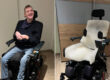
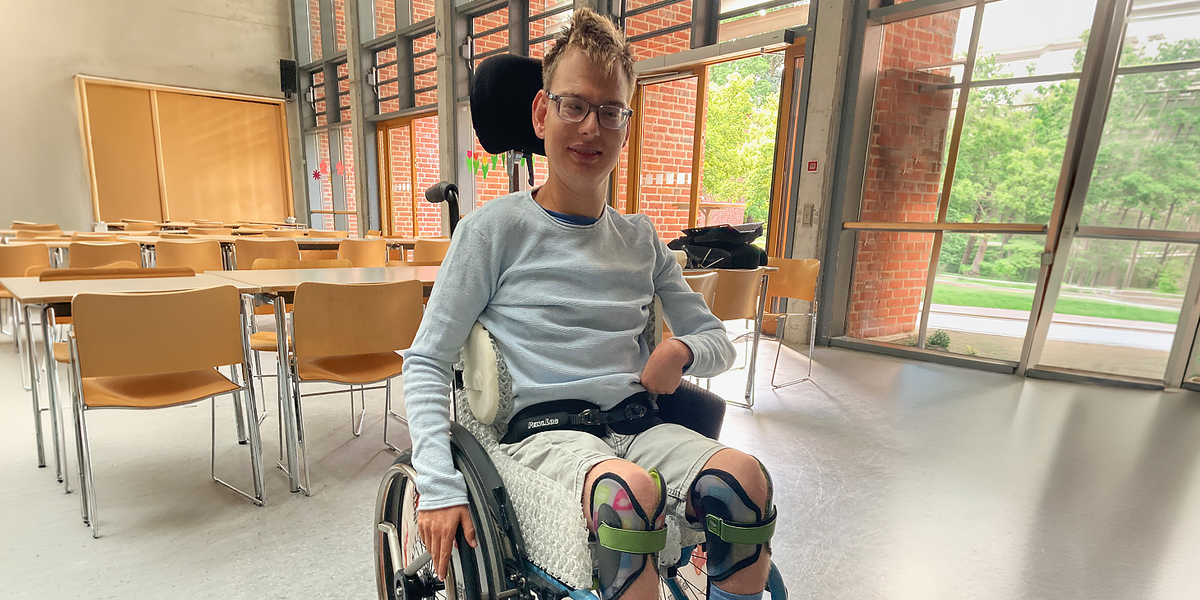
Henry’s new seating support
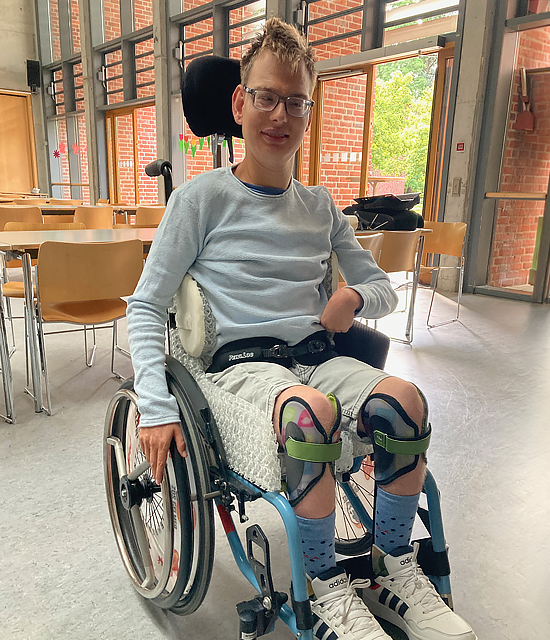
Henry is proud of his new seating orthosis — and for good reason. A well-fitted seating system can make an enormous difference in everyday life for people with complex physical disabilities: it provides stability, relieves pressure on the body, and improves overall well-being.
Jan-Hendrik Warnke, orthopaedic technician at the RAS team and specialist for seating orthoses made from Programmable Foam®, follows one clear goal: a seating solution should be adjusted so that a person can sit comfortably, stably, and pain-free. When this is achieved, it often changes more than just posture — confidence and quality of life improve as well.
In Henry’s case, this effect is clearly visible. His upright sitting position makes it easier for him to propel his wheelchair, reduces strain on his body, and gives him a new sense of stability. However, achieving this solution was challenging and required extensive experience, technical expertise, and close collaboration with Henry and his family.
Henry’s background
Henry is an 18-year-old young man from Senden near Münster. Due to complications during his premature birth, he developed spastic tetraparesis. In addition, a shunt was implanted because of a ventricular condition. Henry also has visual impairments and wears specially adapted glasses.
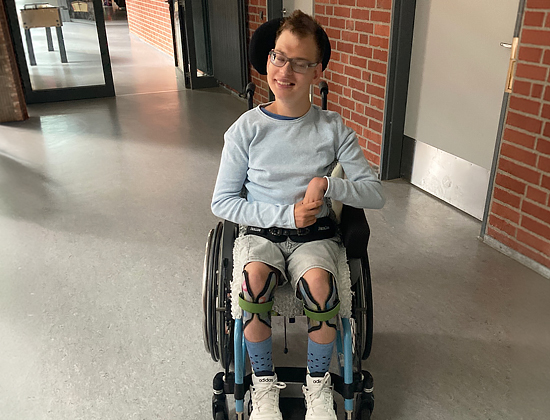
Henry is an active young man who uses a wheelchair and independently drives it with a one-hand propulsion system. However, his physical limitations created several challenges that needed to be addressed in his seating support:
Scoliosis and body alignment
Henry developed a C-shaped scoliosis with a lean toward the left side.
Pain and instability
Due to paralysis in his arm muscles, a shoulder joint subluxation developed. Sitting in the wheelchair for extended periods frequently caused pain and insecurity in his sitting position.
Previous seating solutions
Earlier attempts to improve his posture included braces and conventional molded seating systems. However, Henry and his family viewed the previous brace solutions critically, particularly because of their limited practicality in everyday life
Thinner thoracic pad cushions used in earlier seating systems also occasionally caused pressure points.
Hygiene
Cleaning and maintaining the previous seating system was another challenge. The covers could not be removed without tools, and both the old foam seat and backrest were difficult to clean.
All of these aspects had to be considered in the development of the new seating orthosis.
Since Jan-Hendrik Warnke had already successfully treated many complex postural issues using Programmable Foam®, he suggested this solution to Henry and his family. Given the limited everyday usability of the previous brace system, they were open to trying a new approach and decided to take this path together.
From casting to digital workflow
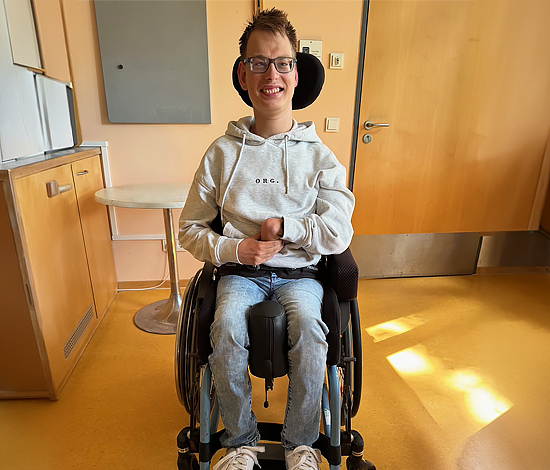
An important step in developing a customized seating orthosis is the precise modeling of the sitting position.
For this purpose, Jan uses a so-called vacuum forming bag. This system allows the patient’s posture to be modeled precisely and adjusted step by step until a stable and relaxed position is achieved.
“In my experience, shape is more important than the right softness,” explains Jan-Hendrik Warnke.
“I’ve had cases where I thought the seating orthosis was slightly too firm. But because the shape was perfect, it worked extremely well in the end.”
While Henry sits in the vacuum bag, his posture is carefully adjusted. In some areas, support is added; in others, it is reduced. The goal is a seating position that is stable, relieves the body, and remains as pain-free as possible.
Once the optimal position is reached, the air is removed from the bag. This preserves the shape and allows it to be used for the next production step.
The next step: 3D scanning
After Henry leaves the vacuum bag, the impression is digitally captured using a high-resolution 3D scanner. Every detail of the shape is recorded as precisely as possible.
The scan is then cleaned up and optimized in CAD software. This digital model later serves as the foundation for the seating orthosis.
Designing the seating orthosis
The digital workflow enables an especially precise adaptation of the seating solution.
After the impression was digitized, Theresa Bley, a colleague from the team, modeled the seat geometry in CAD software so that it matched Henry’s anatomy exactly.
An important component of the design is a set of special removable thoracic pads that compensate for the scoliosis overhang while providing counter-support on the opposite side. These pads were intentionally designed to be somewhat thicker than previous solutions. Combined with the precise shaping and the material’s air circulation properties, Henry can sink slightly into the padding while still receiving stable support — without pressure being applied to the thorax.
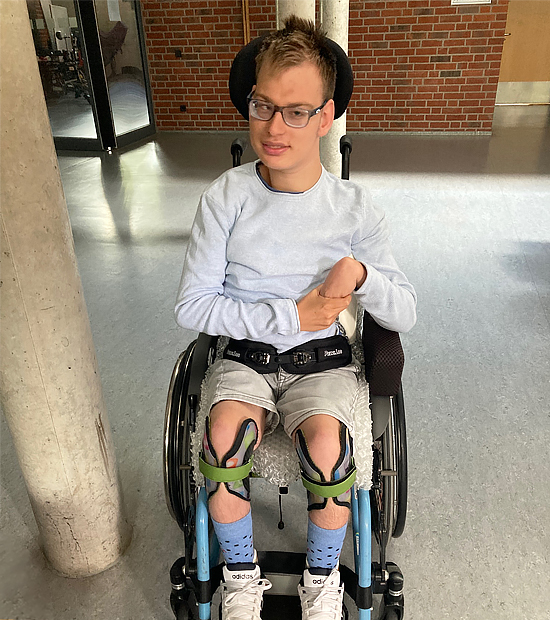
- This creates a dynamic seating experience: stable, but not rigid.
- The corrective function is largely achieved through the seat structure itself. As a result, Henry no longer needs his previous brace system. This not only improves comfort in daily life, but also reduces stress on the skin.
- The design team placed particular emphasis on avoiding pressure points. Because of the large contact area between Henry’s back and the Programmable Foam®, pressure is distributed evenly, making sitting significantly more comfortable.
Working with firmness and softness
Once the shape of the seating orthosis has been finalized, the material properties are defined.
In conventional workshops, this is often achieved by gluing together multiple foam layers. However, this can create hard transitions that negatively affect seating comfort.
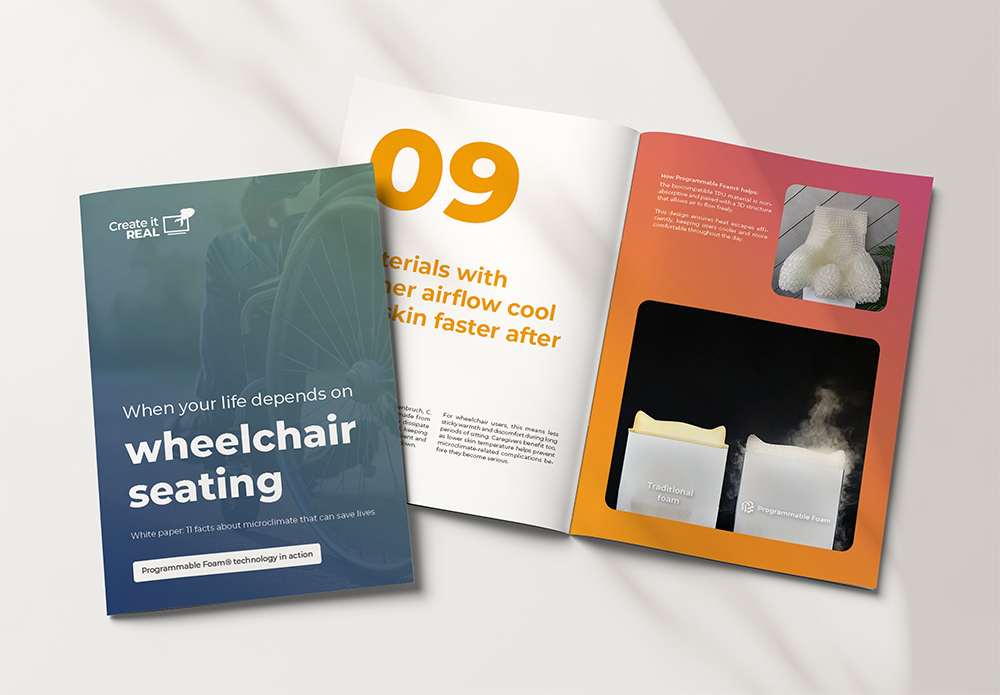
With the digital manufacturing process using Programmable Foam®, different firmness zones can be integrated directly into the material itself. The transitions between softer and firmer areas are smooth and free of noticeable edges.
Once these zones are defined, the seating orthosis is produced using 3D printing technology and then prepared for final fitting.
Empathy as an essential part of care
For Jan-Hendrik Warnke, one thing is just as important as the technical implementation: personal connection with clients.
“Communication is the most important key to success in our profession,” he says.
Especially when working with people with complex disabilities, it is important to listen carefully and actively involve them in the process. When clients and families understand how a solution is developed and what goals it aims to achieve, acceptance of the solution increases significantly.
This combination of technical precision and human connection is a central part of his work.
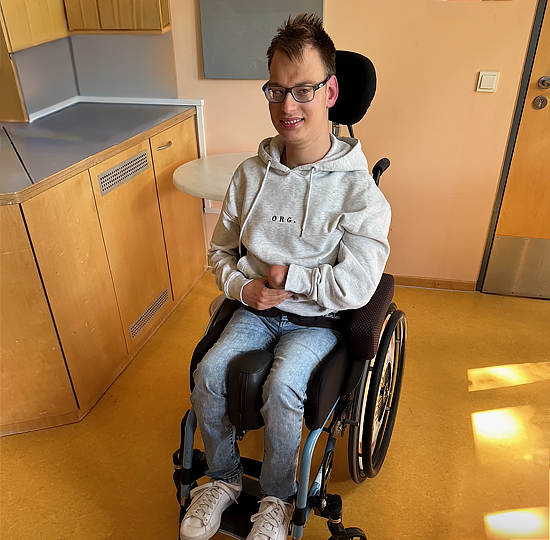
Henry is pain-free and proud of his new sitting position
The new seating system has noticeably changed Henry’s daily life. His posture is more stable, sitting has become easier, and pain occurs far less frequently.
For Henry himself, the most important aspect is the feeling of being able to sit more upright and securely. This change gives him greater confidence in everyday life.
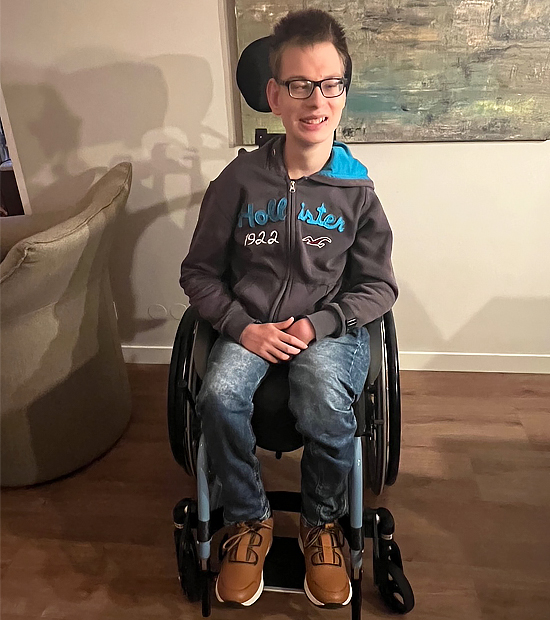
Feedback from the family
Henry’s parents have always been open to new approaches, especially because previous brace solutions had only limited practicality in everyday life. Their satisfaction with the results of the new seating system was therefore even greater.
In addition to the therapeutic benefits, the family also appreciates the practical improvements. The cover and padding can now be removed without tools and cleaned far more easily than the previous foam solutions — an important advantage for daily use.
The success of the seating orthosis has already inspired new ideas: Henry’s father asked the team whether a specially adapted 3D-printed Programmable Foam® cushion could also be created for Henry’s monoski, allowing him to sit comfortably and securely during the family’s ski vacations in the Alps.