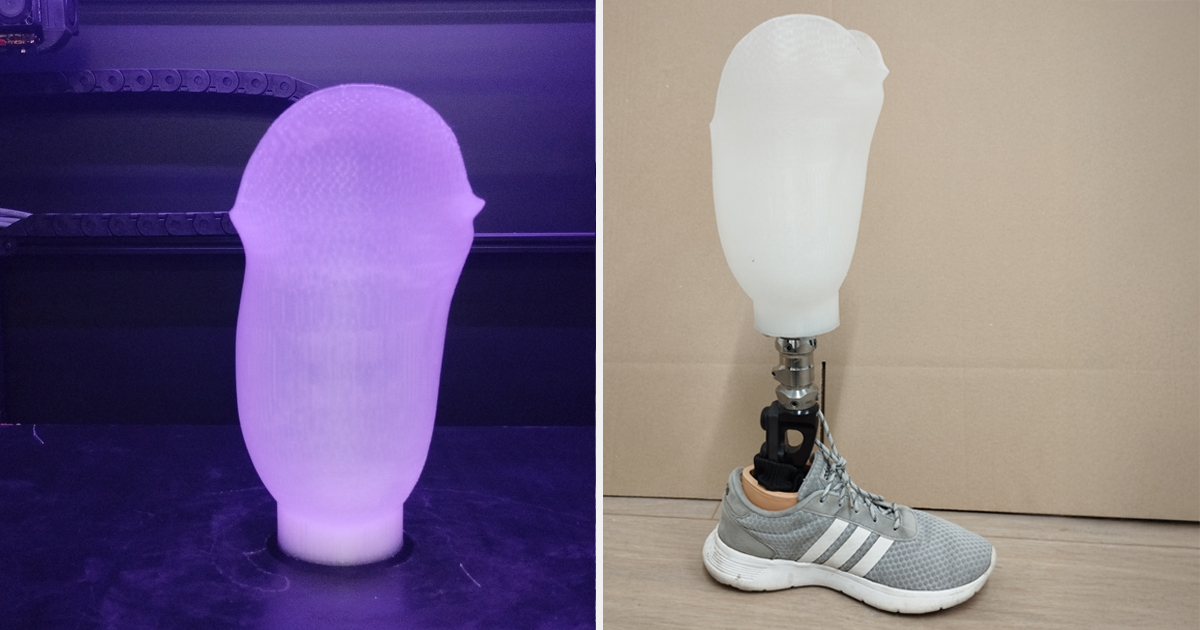
Transforming test sockets with the Embrace Corset solution
FDM 3D printing is the future of test socket manufacturing
Traditional prosthetic socket fabrication relies on a manual, craft-based process that has remained largely unchanged for decades. This conventional method involves messy plaster casting of the patient’s residual limb, the creation of a heavy positive plaster model, and labor-intensive thermoforming of plastic sheets. By moving to FDM (Fused Deposition Modeling) with the Embrace CorsetMaker, Officina Ortopedica Maria Adelaide is eliminating these bottlenecks.
The digital workflow offers several critical advantages:
- Elimination of plaster: 3D scanning replaces the uncomfortable and messy plaster-casting process for patients.
- Reduced manual workload: Technicians no longer need to spend hours manually rectifying plaster models or gluing attachments, as the printer automatically handles complex geometry.
- Cost and time efficiency: Printing enables rapid iterations of test sockets at a lower material cost than traditional molding and manual assembly.
- Digital archiving: Unlike physical plaster molds, which require significant storage space, digital files can be saved and modified instantly as the patient’s limb volume changes.
Pushing the boundaries
As a modern, innovative company, Officina Ortopedica Maria Adelaide has already successfully used the Embrace Corset solution for spinal bracing. Being a Create it REAL reseller and print-on-demand partner for Italy, it was a natural evolution for them to look toward a fully digital workflow for other complex orthopedic needs. They saw a significant opportunity to expand the use of their existing technology to Above-Knee (AK) and Below-Knee (BK) prosthetic sockets.
However, expanding into sockets presented unique technical hurdles. They specifically needed to identify production methods and material profiles that could deliver the necessary stiffness and surface smoothness for patient comfort and structural safety. They required a system capable of handling the high mechanical stress placed on a prosthetic socket while maintaining a professional finish.
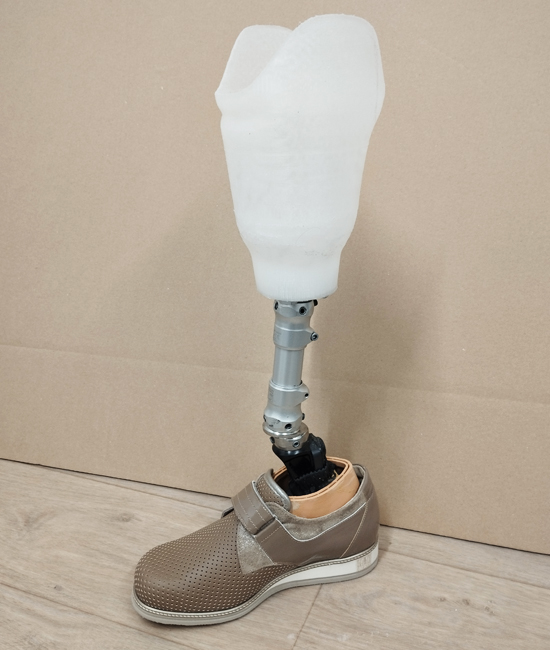
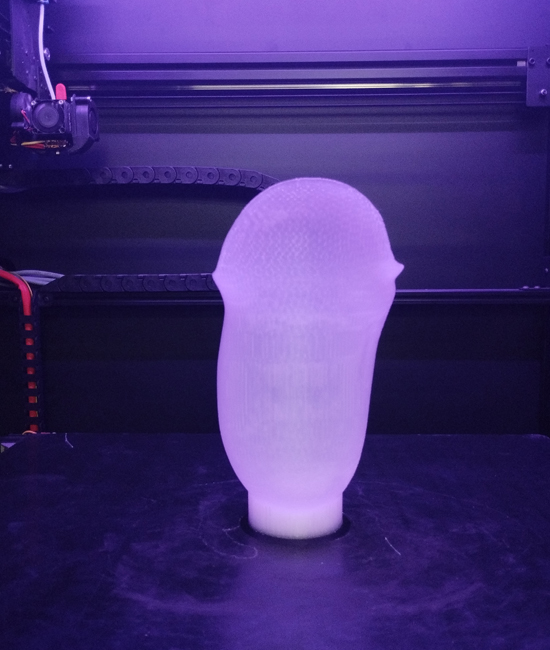
Embrace Corset solution and strength printing
To address these challenges, Officina Ortopedica Maria Adelaide leveraged its Embrace Corset solution and expressed a wish to add another device to its portfolio. This is a classic case of cooperation between a partner with clinical expertise and access, and us as the technology owner.
In this case, we developed a dedicated printing profile to exploit a specific strength-printing strategy. This allows the Embrace CorsetMaker to produce sockets with high structural integrity. For the essential testing phase, Officina Ortopedica Maria Adelaide utilizes Polypropylene (PP) to achieve the right balance of flexibility and strength. Additionally, for practitioners requiring mechanical characteristics even closer to those of a permanent socket, Create it REAL also offers a PETG material profile, which provides increased rigidity and durability.
Seamless integration
The primary hurdle during implementation was achieving a texture smooth enough to allow a good vacuum sealing of the liner inside the socket. Through the partnership, the profile was refined to ensure the socket interior met clinical standards.
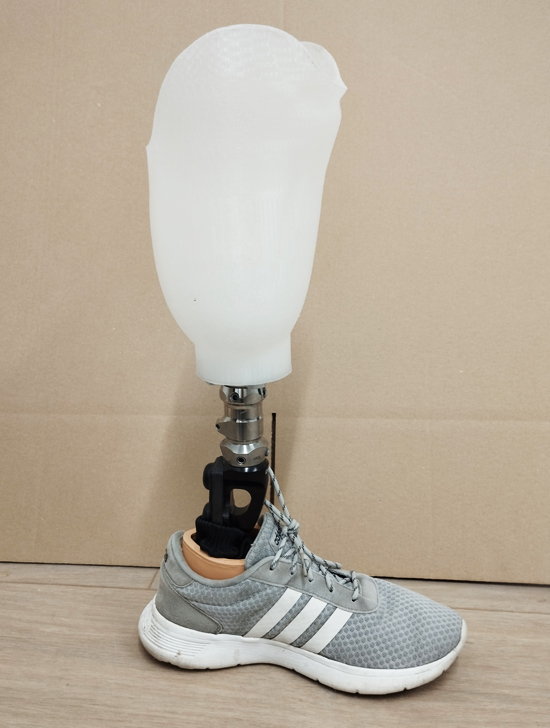
A major breakthrough in the workflow was the ability to print the prosthetic structure attachment directly into the socket. This integration saves the technician significant time and materials compared to the traditional process of positive modeling, thermoforming, and manual attachment gluing.
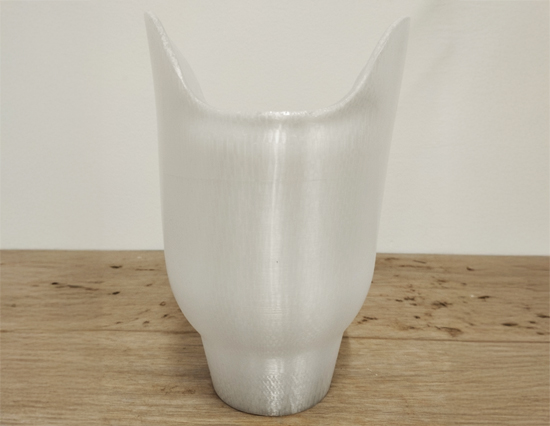
Scalability and speed in Torino
- Proven success: The clinic has successfully produced and fitted more than 50 sockets for their patients.
- Market expansion: They have successfully launched remote production services for other client companies.
- Batch efficiency: The workflow allows simultaneous production of up to three sockets, which are ready the next day for mounting and testing.
The valuable partnership
The collaboration demonstrates that the Embrace Corset solution is a versatile powerhouse for the modern orthopedic clinic. By moving from traditional manual labor to a digital strength printing strategy, the clinic has achieved a faster, more cost-effective, and highly scalable production model. Following these excellent results in prosthetics, Officina Ortopedica Maria Adelaide is now experimenting with AFO.