
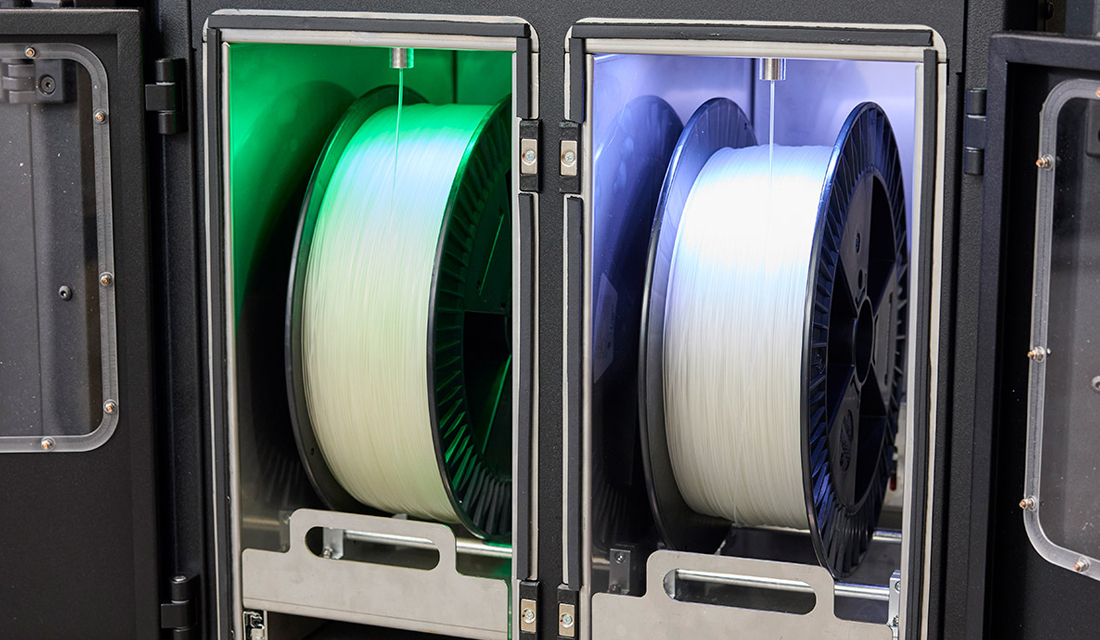
TPU is the new super material
For decades, the healthcare and furniture industries have relied on a historical compromise: polyurethane (PU) foam. It was cheap, easy to mass-produce, and good enough for support. But as we move into 2026, that compromise is becoming a liability. Between a rising global crisis in patient well-being and a tsunami of new EU sustainability regulations, the era of traditional foam is reaching a dead end.
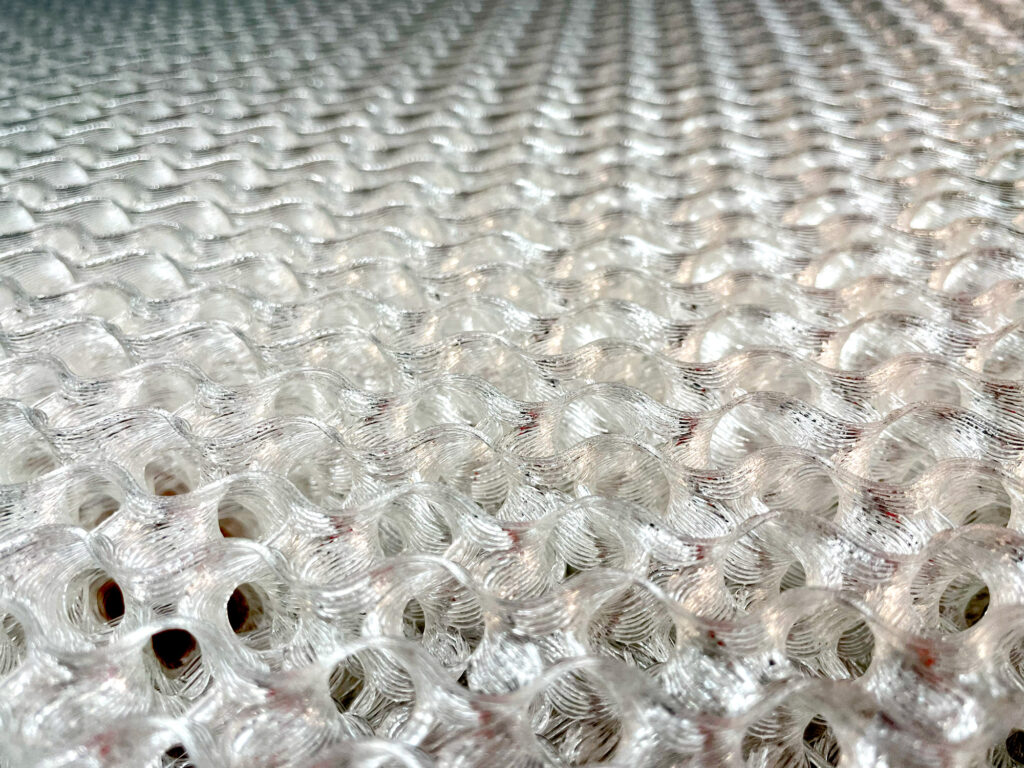
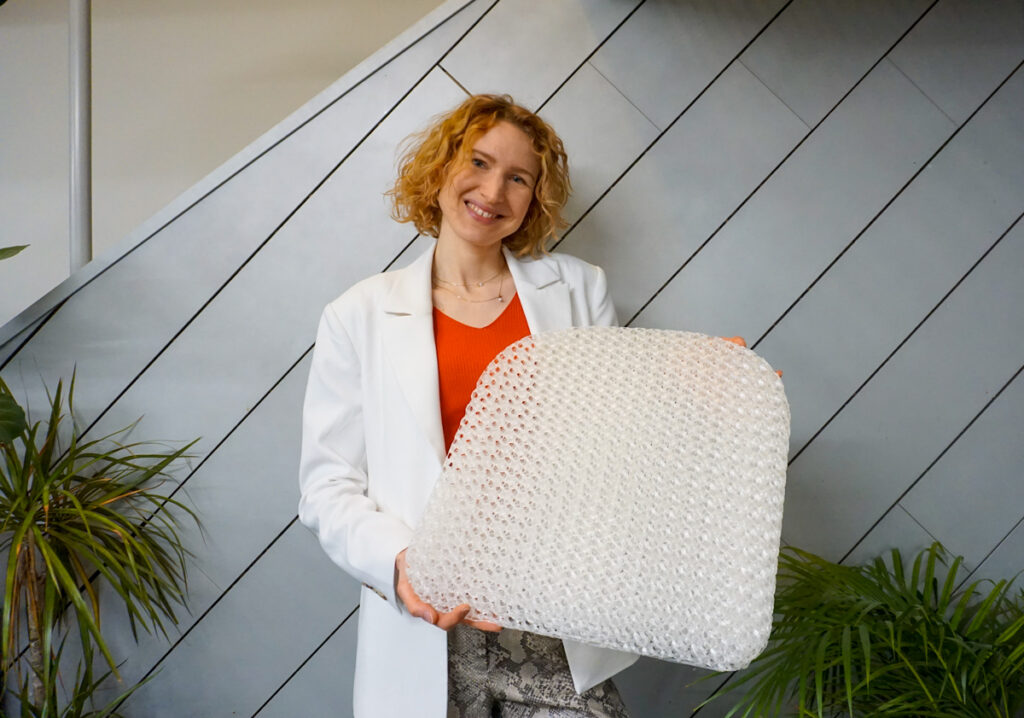
The alternative isn’t just a new material; it’s a shift in philosophy. By using Fused Deposition Modeling (FDM) to create Programmable Foam® from Thermoplastic Polyurethane (TPU), we are turning plastic from a pollutant into a reusable high-performance technical nutrient. But let’s have a closer look at traditional foam and why the game is changing right now.
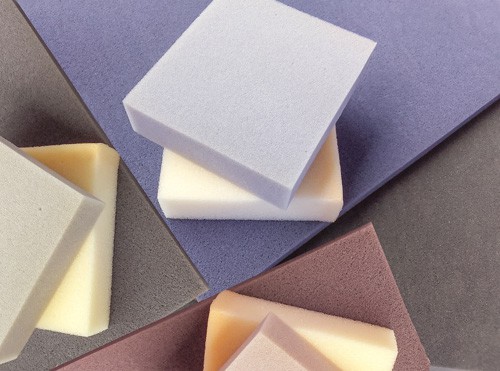
We learned to live with the flaws
To understand why traditional foam is failing us in 2026, we have to look at its birth. It was never designed to support a human spine or heal a pressure ulcer. It was a 1937 laboratory accident by Dr. Otto Bayer, who was actually trying to invent a synthetic fiber. When his mixture foamed up into a hole-filled mass, it was mocked as imitation cheese.
We didn’t adopt foam because it was the best for our skin; we adopted it because, after WWII, we had a massive chemical infrastructure and needed something cheaper than natural rubber. Because traditional foam was never intended for seating, the industry has spent decades trying to bypass its inherent flaws.
Traditional foam is a hazard
- It traps heat: Because it was originally a structural insulator, it does exactly that—it insulates the user, creating a heat trap that destroys skin.
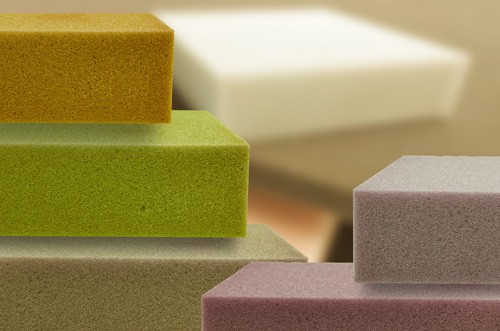
- It lacks support logic: a block of foam is monohardness, meaning it has the same density and reaction throughout. To create varied support, the industry must glue together different slabs, creating a chemical cocktail that is impossible to recycle.
- It is a biological sponge: It was designed as a closed or semi-open cell structure. It was never meant to be sterilized, making it a bacterial trap in modern healthcare.
- It requires chemical life support: Because raw polyurethane is highly flammable and lacks water resistance, it must be treated with additive flame retardants and waterproof coatings. These chemicals, such as organophosphates or PFAS-based repellents, often leach over time or emit toxic off-gases. In 2026, these additives are increasingly targeted by environmental bans, such as the ESPR, turning a simple cushion into a regulatory liability.
Cheap seems to be the main driver of a material’s success, but production cost is only one side of the story. The reality in 2026 has changed a lot since the years after WWII, and today, we have realized that the full circle of a product also includes reuse or recycling.
A tsunami of regulations in 2026
Many professionals still choose traditional foam because of its low upfront cost. However, new regulations are effectively taxing this old technology out of the market.
The ESPR working plan
The EU’s Ecodesign for Sustainable Products Regulation (ESPR) entered its critical implementation phase in April 2025. It has officially prioritized furniture and mattresses for mandatory circularity requirements. By 2026, products must meet strict durability and recyclability standards. Traditional foam, which is often glued to other materials and therefore cannot be recycled, faces a legal dead end.
Eco-modulated fees & the DPP
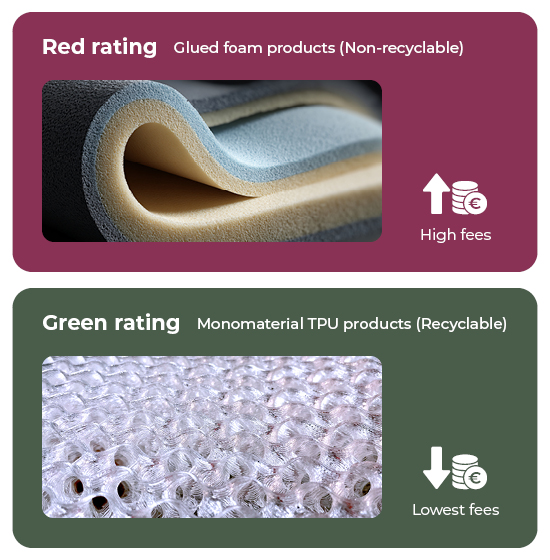
In both the UK and the EU, 2026 marks the arrival of eco modulation. Under Extended Producer Responsibility (EPR) schemes, manufacturers will pay disposal fees based on a traffic light system:
- Red rating: Non-recyclable, glued foam products will face fees up to 2x the base rate.
- Green rating: Monomaterial TPU products designed for the circular economy will incur the lowest possible fees.
Furthermore, the Digital Product Passport (DPP) becomes a reality this year. Every seating aid will eventually require a digital birth certificate. Because Create it REAL’s technology is digital by nature, it is compliance-ready, allowing every gram of material to be tracked and eventually reclaimed.
Visible and hidden costs
- The eco modulation penalty: Under the new UK and EU Extended Producer Responsibility schemes, non-recyclable materials are subject to a tax penalty. If your seating aid uses glued, mixed-density foam, you are paying a surcharge of up to 2x the standard waste fee just to bring that product to market.
- The landfill and incineration gap: EU data from early 2026 shows that the average cost of managing hazardous medical waste, where contaminated foam ends up, is £670- £1,000 per tonne (€770.50- €1,150). In contrast, general recyclable waste costs only £67- £125 per tonne (€77.05- €143.75). For a monomaterial like TPU, providers can even generate revenue by selling the high-grade scrap back into the circular supply chain.
- The daily pressure ulcer bill: In the UK, treating pressure ulcers costs the NHS more than £22 million (€25.3) every day, including acute care and litigation costs. These injuries are often caused by the heat and moisture trapped by foam seating and mattresses.
- The infection multiplier: Healthcare-associated infections (HAIs) add an average of 11 extra days to a hospital stay. Because traditional foam cannot be steam sterilized, it remains a primary vector for these infections.
Summary of verified costs
| Cost type | Traditional foam | Programmable Foam® |
|---|---|---|
| EPR disposal fee | £545 (€626.75) per tonne (Red rated) | £415 (€477.25) per tonne (Green rated) |
| Treatment cost | £670 (€770.50) per tonne (Incineration) | £150 (€172.50) per tonne (Recycle) |
| Clinical impact | High risk of £22m daily ulcer cost (€25.3m) | Active prevention via airflow |
| Material waste | 20% to 30% production scrap | <1% FDM printing waste |
The super-material powering the shift
- Zonal support: Using FDM printing, we can program a single TPU part to have an infinite number of density zones. We can create a firm outer rim for stability and a feather-soft center for pressure relief in one continuous, glue-free print.
- The cleanest method: While other 3D printing methods use toxic resins or messy powders, FDM is a clean process. It extrudes a solid filament with near-zero waste in a non-toxic environment. No need for safety equipment.
- The north star of circularity: TPU is a thermoplastic. It doesn’t have to end up in a furnace. At the end of its life, a seating aid can be ground up, re-extruded, and printed again. It is not a pollutant; it is a technical nutrient.
Designing for the future, now
The low cost of traditional foam was always a myth; we simply offloaded the bill to the planet and the patient’s health. In 2026, the law is finally catching up.
For professionals in the seating and healthcare industries, the choice is clear: continue using stranded-asset technology that is being regulated into extinction, or embrace the super material. Programmable Foam® isn’t just about making a better seat; it’s about using human intelligence to ensure that our most versatile materials serve both human welfare and the planet’s future.
Sources and further reading
NHS England (2017). Stop the pressure annual report.
This report provides the updated £22.4 million daily cost figure and clinical outcomes for pressure area management. https://www.england.nhs.uk/patient-safety/stop-the-pressure/
European Commission (2025). ESPR working plan for circular furniture.
This official roadmap details the mandatory ecodesign requirements for furniture and mattresses, including the phase out of non recyclable foam. https://ec.europa.eu/growth/industry/sustainability/sustainable-product-policy-and-ecodesign_en
Spinal Injuries Association (2025). Pressure care and wheelchair mobility.
This research paper verifies the 80 percent lifetime risk for wheelchair users and the clinical need for breathable support surfaces. https://www.spinal.co.uk/research-and-clinical-evidence/
Packaging Waste Regulation
https://www.gov.uk/government/collections/extended-producer-responsibility-for-packaging-and-furniture